
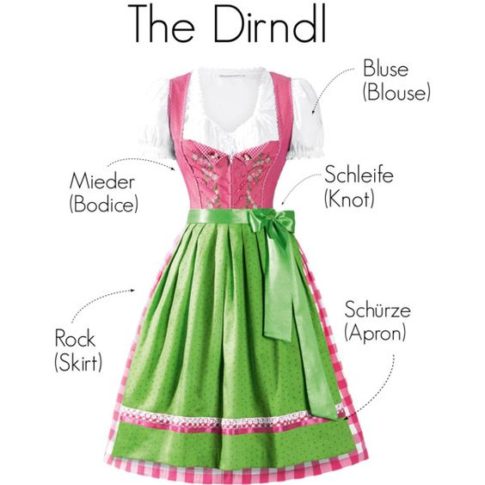
Styling a dirndl for Oktoberfest is about finding the right balance between traditional Bavarian details and your personal style. From choosing the right dirndl dress and blouse to matching the apron, shoes, and accessories, each element contributes to the overall look.
Whether you’re preparing for Oktoberfest or looking for inspiration for a new fashion collection, understanding how these pieces work together can make styling a dirndl much easier. In this guide, we’ll cover the key details of a well-coordinated dirndl outfit, from fit and color to accessories and common styling mistakes.
Why Styling Matters For Oktoberfest Fashion
Styling isn’t just about looks. It signals respect for tradition, dictates your comfort over a long day, and directly shapes your entire social experience at the festival.
Signaling Respect for Bavarian Tradition
Putting thought into your Oktoberfest outfit helps create a more authentic and respectful appearance. A well-styled dirndl reflects appreciation for Bavarian traditions while allowing wearers to express their own fashion preferences.
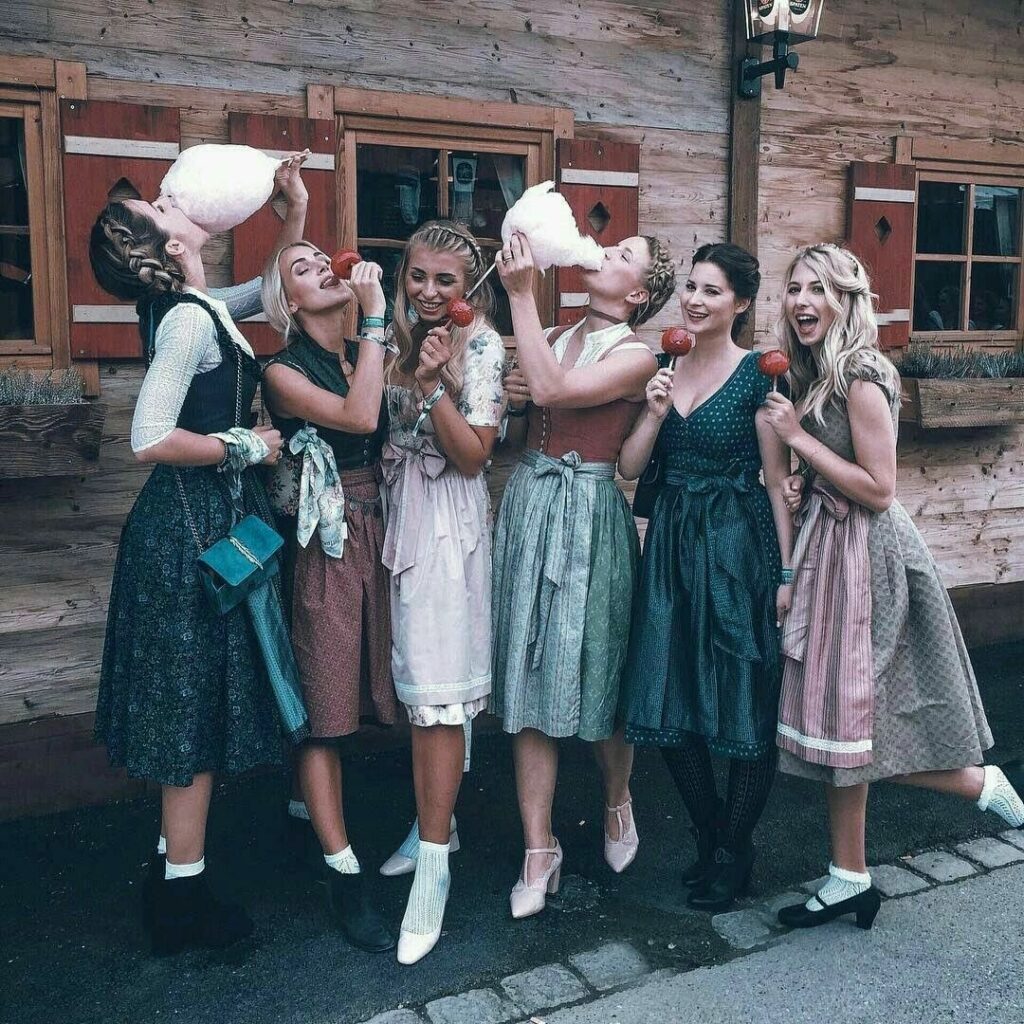
The details can make or break a dirndl look. A traditional dirndl features a structured bodice, blouse, and apron. The blouse completes the classic silhouette, while a knee-length or longer skirt creates a more traditional Oktoberfest look. These details help the outfit feel polished and authentic.
Locals notice the effort. They see cheap gimmicks like novelty hats or T-shirts worn under a dirndl as tasteless and disrespectful. Getting the styling right shows you care enough to understand the local norms, which goes a long way.
Improving Comfort and Social Experience
Oktoberfest is a physical marathon. You’ll spend hours walking, standing on benches, and moving through crowds. Your clothing choices directly impact whether you’ll last the day. A dirndl bodice that’s too tight might look good for a photo, but it risks popping a zipper the moment you start dancing.
Smart styling is functional. The weather in Munich can swing from cool mornings to warm afternoons and cold nights. Layering with traditional cardigans or shawls keeps you comfortable without ruining the look. Your footwear has to be ready for a full day on your feet, often on uneven ground. Comfort isn’t a luxury here; it’s a necessity.
When you’re comfortable, you have a better time. You also look better in the endless photos that will be taken. A sloppy, under-styled outfit stands out negatively in group pictures, but a well-put-together look harmonizes the group and enhances the entire social vibe.
Choosing The Right Dirndl Dress
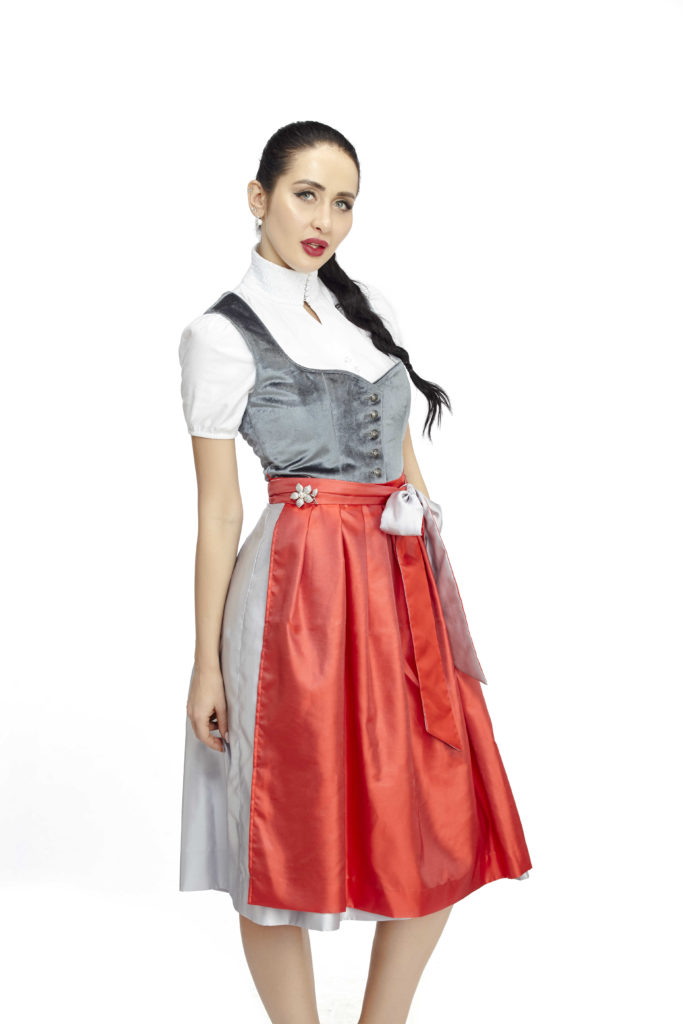
Your dirndl’s length and color signal your style. Midi is the most versatile length, while your color palette shows if you lean traditional or modern.
Selecting Appropriate Length
Dirndlkleider come in three main lengths, and the one you pick sets the tone for your entire outfit.
- Mini dirndls end above the knee and offer a more modern, youthful interpretation of traditional styles. They are often chosen by customers who prefer a shorter and more contemporary silhouette.
- Midi dirndls fall just below the knee. This is the most common and versatile choice, fitting in perfectly at almost any Oktoberfest setting.
- Long dirndls extend to the ankles. This provides a more traditional and elegant look, often chosen for formal events or by those who prefer a classic style.
Choosing Suitable Colors
The color palette you choose is a clear indicator of whether you’re going for an authentic or contemporary vibe.
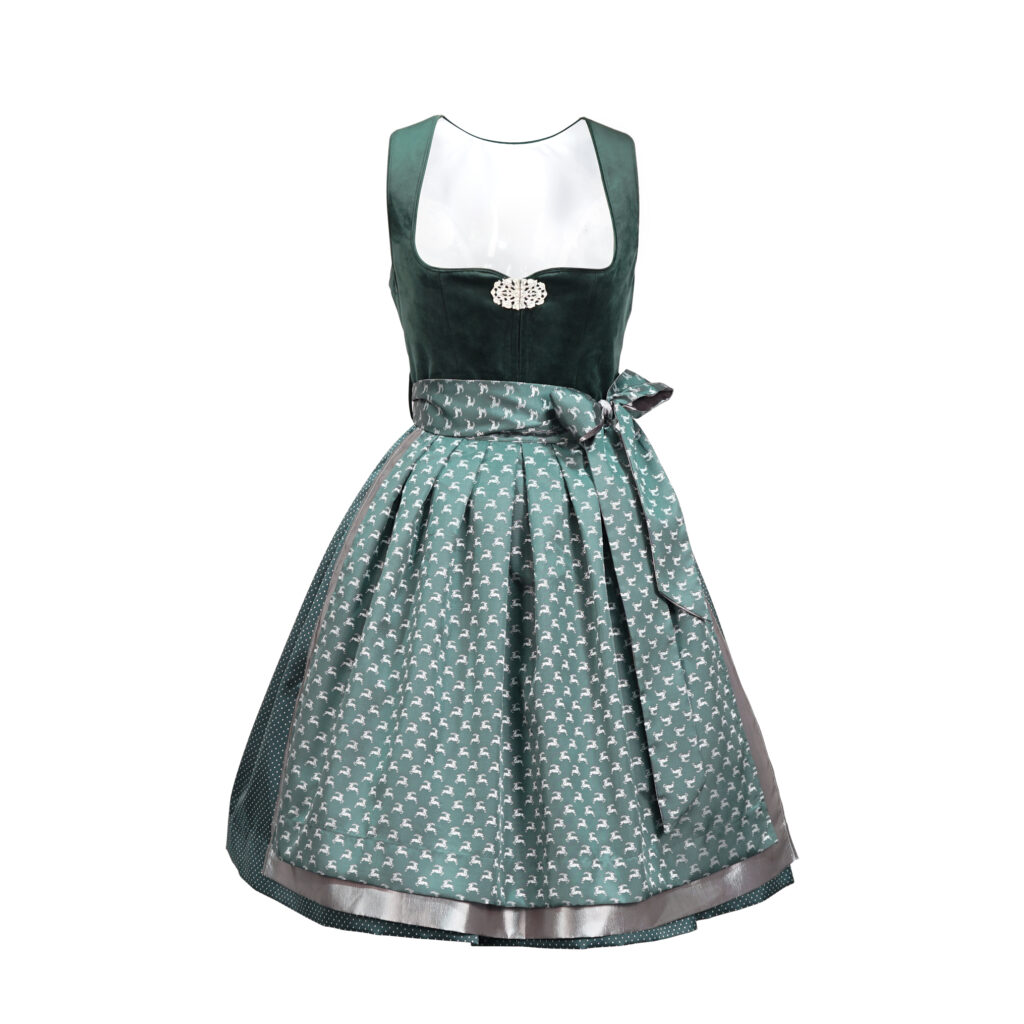
- Traditional dirndls reflect their alpine heritage, often featuring subdued colors like blue, green, deep red, and earth tones.
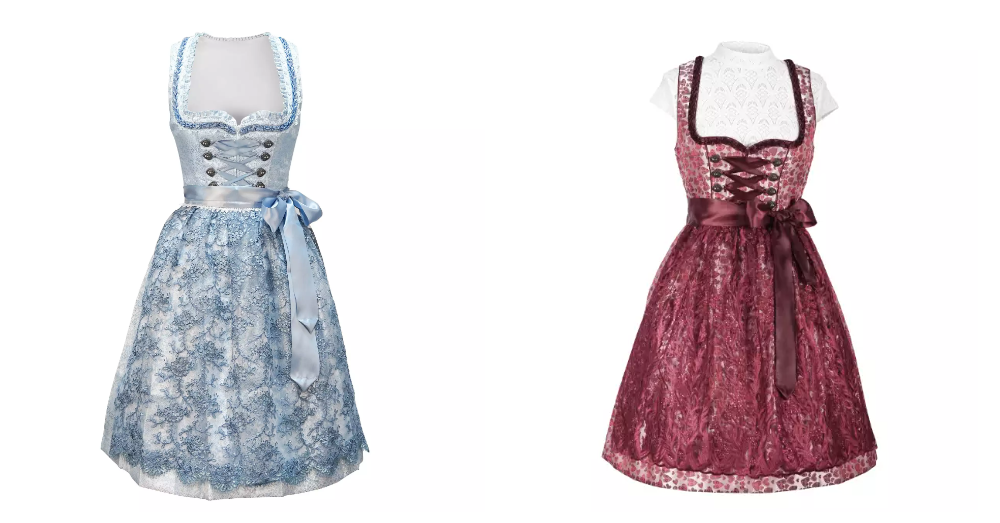
- Modern versions embrace a much wider palette. You’ll see bright pastels, pinks, and high-contrast combinations for a more festive look.
- The apron typically complements the dress, either in a similar tone or a soft contrasting shade. A white blouse is standard because it helps the colors of the bodice stand out.
- Ultimately, your color choice signals whether you prefer a timeless, authentic style or a more fashion-forward appearance.
Fast, Flexible Production for Your Brand

Essential Accessories For Completing The Look
Your dirndl isn’t complete without the right accessories. The apron, shoes, and jewelry aren’t just extras; they make the outfit authentic and functional.
| Accessory | Key Function | Styling Rule of Thumb |
|---|---|---|
| Apron (Schürze) | Defines the waist, adds color/texture, and signals relationship status with the bow’s position. | The apron must always be slightly shorter than the dirndl skirt. Never longer. |
| Shoes | Provide comfort for all-day standing and walking while matching the traditional or modern style of the outfit. | Must be closed-toe. Prioritize comfort. Avoid bulky athletic sneakers or high stilettos. |
| Schmuck | Adds personal flair and reinforces the Alpine aesthetic without overwhelming the outfit. | Less is more. Choose one main statement piece (necklace, earrings, or charivari), not all three. |
Aprons
The apron (Schürze) is a defining part of the dirndl. It completes the outfit and helps create the classic silhouette. It cinches the waist to create that classic silhouette and offers a chance to add contrast with different colors and fabrics like cotton, silk, or lace. Many women own multiple aprons to give a single dirndl different looks across several festival days.
The two biggest rules involve length and the bow. The apron hem must end at or slightly above the skirt’s hemline; a longer apron is a major style mistake. The position of the bow’s knot is a social code: tied on the left means you’re single, on the right means you’re in a relationship, and in the back is for widows or waitstaff.
Shoes
Oktoberfest is a marathon, not a sprint, and your feet will feel it. The right shoes have to be comfortable enough for hours of walking, standing, and dancing on benches, but still look the part. Bulky running shoes or strappy sandals are out. They’re either impractical or clash with the entire look.
Safe bets are closed-toe shoes like low-heeled pumps, Mary Janes, ballet flats, or simple ankle boots. These options provide support and protection from spills. Stick to neutral colors like black, brown, or taupe in leather or suede. And if you wear tights, make sure they are simple—nude or white—as brightly patterned ones distract from the dirndl itself.
Schmuck
Jewelry should complement the outfit, not compete with it. The goal is to add a touch of Alpine character. Common choices include necklaces with Edelweiss or heart pendants, or a traditional “Charivari”—a silver chain with small charms like coins or antlers, worn on the bodice.
The key is restraint. Wearing a statement necklace, statement earrings, and a Charivari all at once is a classic sign of someone trying too hard. Pick one piece to be the focal point and keep everything else simple. The jewelry should support the neckline and overall color scheme, not overwhelm it.
Common Oktoberfest Styling Mistakes To Avoid
Common dirndl styling issues usually involve incorrect fit, unsuitable accessories, or missing details that affect the overall balance of the outfit.
Core Garment and Fit Mistakes
One common styling issue is choosing a costume-inspired design rather than a well-constructed dirndl. Fabric quality, silhouette, and finishing details all influence whether the final look feels authentic and suitable for Oktoberfest. A real dirndl is a three-piece outfit: the dress, a blouse, and an apron. Skipping the blouse is a major faux pas that immediately signals you’re a tourist.
Fit is everything. A bodice that’s too loose bunches at the waist and ruins the classic hourglass shape. One that’s too tight looks unflattering and can cause gaping at the bust or even pop a zipper. The bodice should be snug, shaping the waist without cutting in. The waistline itself must sit at your natural waist, not down on your hips.
Skirt length also sends a clear message. Ultra-short skirts are a hallmark of cheap costumes, not traditional wear. For an authentic look, the skirt should fall at or below the knee. Any petticoats or slips worn underneath for volume should be the same length or slightly shorter than the skirt; a visible petticoat hanging below the hem looks sloppy.
Even small details like lacing matter. For bodices with a lace-up front, the ribbon or chain should be threaded from the top hooks down, not the other way around. It’s a subtle detail, but one that locals notice.
Accessory, Footwear, and Finishing Touches
Apron mistakes are incredibly common. The number one error is an apron that hangs longer than the skirt hem. It should end at the same point as the skirt or be slightly shorter. The bow placement is another critical detail, as it signals your relationship status. Tying it on the left means you’re single, while the right side means you’re taken. A bow tied in the back is for waitstaff or widows, and a knot in the front center is generally seen as a style mistake.
What’s underneath is just as important. Brightly colored or patterned bras showing through a lace blouse or peeking out of the neckline look unpolished. The professional move is to wear a neutral, nude-colored bra that matches your skin tone. It provides support without distracting from the outfit.
Your footwear choice can make or break the entire look. Open-toed shoes, sandals, and flip-flops are impractical and out of place. Bulky athletic running shoes clash with the traditional silhouette. Stick with closed-toe shoes like simple pumps, ballet flats, Mary Janes, or ankle boots. Comfort is key, so make sure you can stand and walk in them for hours.
When it comes to jewelry and accessories, less is more. Layering a statement necklace, large earrings, and a Charivari chain all at once is considered “trying too hard.” Pick one focal point and keep other pieces understated. The goal is to complement the dirndl, not compete with it. Simple braided hairstyles also work well, as they align with the traditional aesthetic and hold up through a long day of festivities.
Frequently Asked Questions
What shoes go with a Dirndl?
The best shoes for a Dirndl are comfortable and match the style of your outfit. Classic options include Mary Janes, ballet flats, and low-heeled pumps. For a more modern look, ankle boots and loafers are popular. You can even wear clean, simple sneakers if you style them intentionally. It’s best to avoid high stilettos, flip-flops, or bulky running shoes, as they are impractical for the festival grounds and can clash with the traditional outfit.
Can I wear sneakers with a Dirndl in 2026?
Yes, wearing sneakers with a Dirndl is a popular and accepted modern style for Oktoberfest. For the best look, choose clean, slim sneakers like white leather trainers or canvas shoes. Avoid bulky or dirty athletic shoes. Pairing your sneakers with traditional dirndl socks or knee-highs can help tie the whole outfit together.
Final Thoughts
A well-styled dirndl brings together traditional Bavarian details, comfortable fit, and personal style. From the dress and blouse to the apron, footwear, and accessories, each element can shape the overall look. Whether you prefer a classic color palette or a more contemporary combination, the right styling can help you feel confident and comfortable throughout Oktoberfest.
For brands developing women’s fashion collections, these styling details can also provide useful direction for design and product development. As a one-stop garment manufacturer, we support OEM and ODM projects from design development and sampling to bulk production, helping brands turn their ideas into market-ready garments.



 German
  English
  French
  Portuguese
  Hindi
Hindi  Italian
  Japanese
  Korean
  Spanish
  Arabic
  Russian