
As global education systems continue to evolve, more and more countries are re-evaluating their school uniform policies. In Latin America, while many countries have long maintained the tradition of wearing school uniforms, not all implement a nationwide mandatory requirement.
This analysis clarifies national mandates versus school-level rules. We examine the practical application of ‘no uniform’ policies in Brazil and the traditional ‘guardapolvo’ smock system in Argentina and Uruguay, giving you a clear framework for your procurement strategy.
Why Some Countries Don’t Require School Uniforms
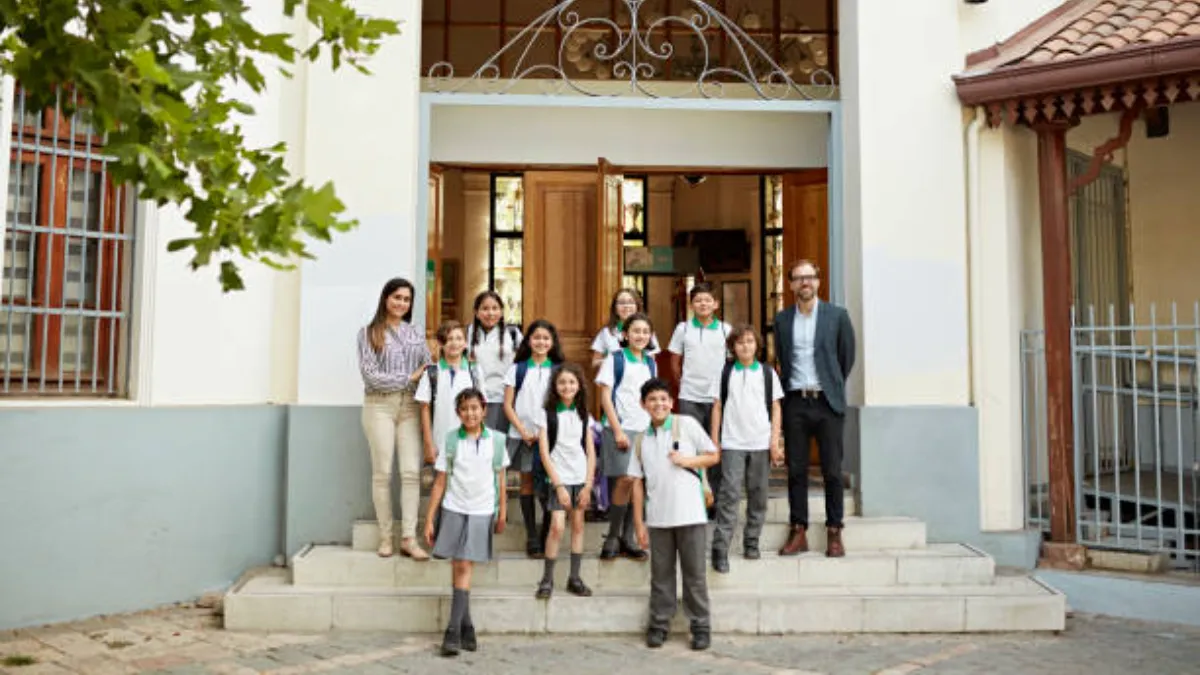
Whether or not to require students to wear school uniforms is typically influenced by a combination of factors, including a country’s education system, cultural traditions, level of economic development, and the degree of school autonomy.
More Localized Education Management
Some Latin American countries practice a high degree of educational autonomy. National education departments are responsible for setting curriculum standards and education policies, while student dress codes are left to local education authorities, school boards, or principals.
This management approach allows schools to develop more suitable dress policies based on their own culture, teaching philosophy, and the characteristics of their student body.
For example, some schools hope to enhance student belonging through uniform attire and therefore purchase standardized school uniforms; others emphasize student individuality and only require students to dress neatly and appropriately, without specifying fixed styles.
Therefore, school uniform manufacturers that can provide flexible customization options are better able to meet the needs of different schools.
Respect for School Culture and Educational Philosophy
In recent years, more and more educational institutions have begun to focus on student individual development and campus culture building. Some schools believe that while uniform school uniforms can enhance discipline, they may also restrict student individuality. Therefore, they prefer to establish flexible dress codes rather than requiring all students to wear identical school uniforms.
For example, some schools only specify clothing colors, whether they include school logos, and overall dress codes, allowing students to freely choose different brands and styles. This model maintains the overall image of the school while giving students some choice.
Für school uniform suppliers, this means product development cannot be limited to traditional standardized school uniforms, but needs to offer more combinable and customizable product lines, including:
- Different colors and color schemes
- Multiple fabric options to suit different climates
- Different designs for boys and girls
- The option to add school logos, badges, or embroidery
- Customization needs for different grades and school activities
This flexible product strategy aligns better with the development trend of school procurement models in some Latin American countries.
Climate Drives Diverse Clothing
Latin America spans multiple climate zones, including tropical, subtropical, highland, and temperate zones. Significant differences in climate conditions exist between different countries and even within the same country and between different regions. This makes it more difficult to establish unified national standards for school uniforms.
For example, lightweight, breathable fabrics with good moisture-wicking properties are more suitable for hot regions, while high-altitude or colder climates require seasonal items such as knitwear, jackets, and trousers. Therefore, many schools prefer to choose their own uniform options based on local conditions rather than adhering to a uniform standard.
This places higher demands on professional school uniform suppliers. In addition to providing basic uniforms, they need a comprehensive product portfolio to create complete uniform lines for schools, including short-sleeved shirts, long-sleeved shirts, sportswear, knitwear, jackets, and accessories, to meet the procurement needs of different regions and seasons.
Fast, Flexible Production for Fashion Brands

Latin American Countries Without Mandatory School Uniform Policies
While Latin America as a whole retains a strong school uniform culture, not all countries require all students to wear uniforms. In many countries, the central government only sets the educational framework, while the specific decision on whether to require students to wear uniforms is made by local education departments, school boards, or school management.
Countries With Flexible School Policies
While some Latin American countries do not have a nationwide mandatory school uniform policy, many schools still set their own uniform requirements based on their needs. This “school autonomy” model leads to significant differences in school uniform procurement.
Chile
Chile does not have a nationwide mandate requiring all schools to wear uniforms. The education department grants schools considerable autonomy, allowing them to decide whether to implement a uniform system based on their educational philosophy, school culture, and parental opinions.
In practice, many public and private schools still require students to wear uniforms to maintain school order, enhance school identity, and facilitate daily management. However, some schools adopt a more flexible dress code, specifying only clothing colors or basic dress guidelines without restricting specific styles.
Uruguay
School uniform management in Uruguay also exhibits some flexibility. Some public schools require students to wear uniforms or smocks, but not all schools enforce the same rules. Private schools typically have greater autonomy and can formulate their own uniform policies based on their own positioning.
This differentiation means that market demand covers multiple levels, from standardized uniforms to personalized uniforms. When selecting school uniform manufacturers, buyers focus more on whether suppliers can provide customized designs based on the school’s image, rather than simply offering fixed styles.
Costa Rica
Costa Rica’s education system also allows schools to set their own dress codes to a certain extent. Many schools require students to wear uniforms, but the specific styles, colors, and combinations are determined by the schools themselves; there is no nationally unified uniform standard.
Overall, although these countries lack nationally mandated policies, the demand for school uniforms remains widespread. Schools are placing greater emphasis on product quality, comfort, durability, and customization capabilities, rather than simply purchasing standardized products. This creates more opportunities for collaboration among school uniform manufacturers capable of providing complete solutions.
Countries Allowing Individual School Decisions
Besides countries with more flexible policies, some Latin American countries are giving schools more autonomy in deciding whether to require school uniforms. Governments typically do not mandate uniform styles, allowing schools to develop their own dress codes based on their management needs.
Argentina
Argentina does not have a nationwide mandatory school uniform system. Many schools develop their own dress codes; some require uniforms, others only require students to wear clothing in colors or styles specified by the school, and still others emphasize neatness and appropriateness.
This model means that the purchasing needs of schools vary considerably. Some schools require a complete uniform line, including shirts, trousers, skirts, cardigans, and sportswear; others prefer to purchase basic clothing and use embroidered badges or printed logos to represent the school.
Brazil
As one of the largest education markets in Latin America, Brazil does not have a nationwide uniform policy. Different states, cities, and schools have considerable autonomy, so the decision on whether to wear school uniforms and their specific styles is usually made by the school or local education authority.
Many public schools provide uniforms for ease of management and to reflect the school’s image; meanwhile, some schools adjust their dress requirements according to local conditions. This diverse market environment means that procurement demand covers multiple levels, from basic uniforms to customized clothing with school characteristics, all with stable demand.
Mexico
The situation in Mexico also reflects the important characteristic of school autonomy. While many schools require students to wear uniforms, the relevant regulations are usually set by local education departments or schools, rather than a uniform national standard.
Significant differences can exist between different regions and schools in terms of color, style, accessories, and seasonal clothing arrangements.
How Public and Private Schools Handle Uniform Rules
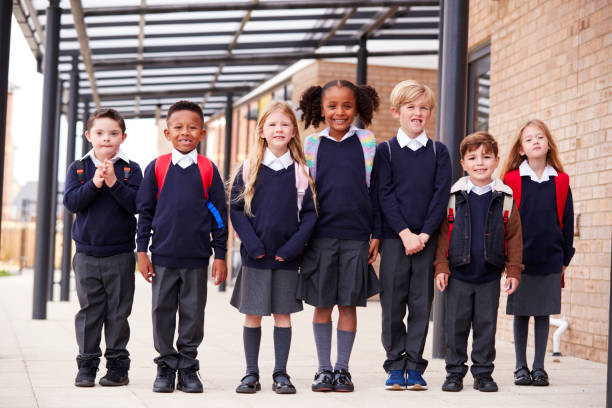
While some Latin American countries do not have a nationwide mandatory school uniform system, this does not mean that public and private schools adopt the same approach to uniform management.
Public schools typically prioritize practicality, cost control, and long-term supply capabilities. In some countries, local education departments or schools set uniform dress requirements, hoping to improve campus management efficiency and enhance student sense of belonging through uniforms.
In contrast, private schools usually have greater autonomy in decision-making and place more emphasis on building their school brand. School uniforms are not only clothing worn by students daily but also an important part of school culture and brand image. Therefore, private schools often aim to reflect their school characteristics and enhance their overall campus image through distinctive designs.
What These Policies Mean For Uniform Suppliers and Buyers
For the international market, the diversification of Latin American school uniform policies has not weakened market demand; on the contrary, it has made procurement models more flexible and created more cooperation opportunities for professional school uniform suppliers.
As many countries delegate school uniform management authority to schools, procurement decisions are increasingly shifting from large-scale government projects to numerous school, educational group, and regional procurement projects. This means market demand is becoming more dispersed, and greater emphasis is placed on supplier responsiveness, product flexibility, and service capabilities.
For buyers, selecting partners involves more than just price; they also comprehensively evaluate a supplier’s ability to support long-term cooperation. For example, they consider factors such as maintaining consistent product quality across batches, the ability to quickly replenish orders when student numbers change, and stable delivery capabilities. These factors directly impact the smooth implementation of procurement projects.
Hangzhou-Kleidung continuously provides diverse school uniform solutions to global clients. Leveraging its comprehensive production system, extensive product range, and customization capabilities, Hangzhou Garment helps clients create customized products that align with their school’s brand image and procurement needs.
Final Thoughts
Relying on national laws alone is a flawed sourcing strategy that misses the real opportunity. The actual demand is driven by individual school policies, from full uniforms to partial dress codes. Understanding these local nuances is the only way to build a relevant and profitable inventory.
A school uniform manufacturer that can provide high-quality products, stable production capacity, and flexible customization services will be better able to meet the needs of different schools and educational institutions and establish long-term and stable cooperative relationships. Contact our team to review the ideal product mix for your country.
Frequently Asked Questions
Which Latin American countries do not have national laws requiring school uniforms?
Brazil has no national legal requirement for school uniforms, leaving the decision to individual public and private schools. In Argentina and Uruguay, state schools traditionally use white smocks (guardapolvos) over regular clothes instead of a full, standardized uniform, though specific school policies can still vary.
What does a ‘no school uniform’ policy mean in practice in Latin America?
It rarely means a complete absence of rules. More often, it translates to a dress code that governs appropriateness, or a partial uniform, like requiring a school T-shirt while allowing students to choose their own pants or skirts. This approach balances individuality with school identity.
Why do most schools in the region continue to use uniforms?
Uniforms are widely used due to strong cultural traditions linking them to discipline and equality. They are also seen as a practical way to reduce visible socioeconomic differences between students, simplify morning routines for families, and make it easier to identify students for safety reasons.
How does climate affect school dress policies in Latin America?
The region’s warm and humid climate significantly influences uniform design. Many schools opt for lightweight, breathable materials like cotton T-shirts and shorts. In schools with more flexible policies, rules are often adapted to allow for greater comfort during hot seasons, while still maintaining a sense of order.




 German
  English
  French
  Portuguese
  Hindi
Hindi  Italian
  Japanese
  Korean
  Spanish
  Arabic
  Russian