
Over the past decade, as a dedicated school uniforms manufacturer, we’ve witnessed a clear and telling shift in how institutions approach student clothing: the demand has evolved from “just make them look the same” to “make them functional, comfortable, and aligned with student wellbeing.” That shift tells us everything we need to know about the enduring and growing value of school uniforms.
This article explores the top 10 reasons why school uniforms are good for students, schools, and communities, weaving in the manufacturing science and supply chain insights.
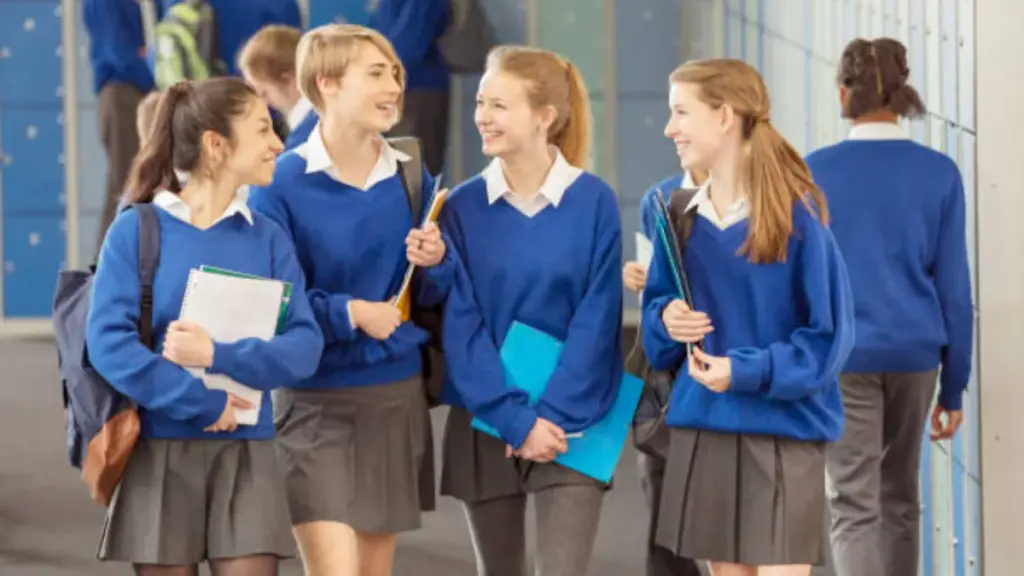
Reason 1: Promoting Social Equality
One of the most cited advantages of wearing school uniforms is the erasure of visible socioeconomic differences among students. When every child wears the same garment, brand-name clothing and designer labels lose their social currency inside school walls.
From a manufacturing perspective, this equality starts with standardized pattern-cutting and grading. A well-engineered uniform uses consistent silhouettes across all size ranges — from a 6-year-old’s small frame to a 17-year-old’s near-adult build — ensuring that no size looks “cheaper” or less refined than another. The cut itself becomes the great equalizer. There are no “premium” versions; every student receives the same construction quality, the same stitching density, the same finished seams.
This is why school uniforms are good not just as a concept, but as a physical object: when made correctly, they embody equality in every thread.
Uniform policies vary widely by region — see which Latin American countries require school uniforms and why.
Reason 2: Enhancing Campus Safety
A recognizable uniform is a safety tool. On field trips, during emergencies, or simply during drop-off and pick-up at a busy school gate, a visually unified group of students is dramatically easier to monitor and manage.
This is where dye consistency becomes a serious manufacturing concern. At Hangzhou Garment, we use reactive dyeing processes that meet a ΔE (color deviation) standard of ≤1.0, meaning every batch of fabric — regardless of production run — delivers the same identifiable color. A child wearing the school’s royal blue should be instantly recognizable even in a crowd, not wearing something that has faded to teal after three washes.
For schools implementing high-visibility safety features — such as reflective trim on uniforms for early-morning commuters — we integrate EN ISO 20471-compliant retroreflective tape directly into the garment construction, ensuring compliance with pedestrian safety standards.
Reason 3: Improving Academic Focus
The benefits of school uniforms extend well beyond the visible. Research in environmental psychology consistently shows that physical comfort directly influences cognitive performance. A student distracted by an itchy collar or a shirt that restricts shoulder movement is a student not fully present in their learning.
At the manufacturing level, focus-friendly design means:
- Breathable cotton blends (65% cotton / 35% polyester) that regulate body temperature in both heated classrooms and outdoor environments.
- Tagless label printing replacing sewn-in labels, eliminating the #1 source of skin irritation reported by younger students.
- Flat-lock seam construction on stress points (underarms, collar) that prevents chafing during long school days.
When why should students wear school uniforms is framed through a comfort lens, the answer is straightforward: a well-manufactured uniform removes physical distractions, allowing students to focus on what matters.

Reason 4: Building Discipline and Professional Identity
There is a well-documented psychological phenomenon known as “enclothed cognition” — the idea that what we wear influences how we think and behave. Studies have shown that students in uniforms report higher levels of self-discipline and are perceived by teachers as more focused and prepared.
For adolescents in particular, a uniform signals a transition: from home to school, from leisure to purpose. The structure of professional dress — buttoned collars, tucked shirts, polished shoes — mirrors the expectations of the adult workplace and prepares students for professional environments long before they enter them.
This is among the most compelling reasons why school uniforms are good for long-term character development, not merely short-term behavior management.
Reason 5: Reducing Financial Burden
Cost is one of the most frequently raised concerns by parents when uniform policies are introduced. Yet this objection is often based on the retail pricing model — not the manufacturing reality.
Why should students wear school uniforms when they cost so much? The honest answer is: they don’t have to.
As a factory-direct school uniforms manufacturer, Hangzhou Garment eliminates the distributor and retailer markup layers that can inflate uniform costs by 40–70%. When schools partner directly with us, they benefit from:
| Procurement Channel | Avg. Cost per Set (USD) | Cantidad mínima de pedido | Customization | Lead Time |
|---|---|---|---|---|
| Retail Store | $45 – $80 | Ninguno | Ninguno | Immediate |
| Wholesale Distributor | $28 – $45 | 200+ sets | Limited | 4–8 weeks |
| Factory-Direct (Hangzhou Garment) | $12 – $22 | 100+ sets | Full (logo, color, cut) | 3–5 weeks |
The advantages of wearing school uniforms from a cost perspective are fully realized only when schools bypass the retail chain. Factory-direct procurement transforms uniforms from a financial burden into a budget-efficient policy tool.
Looking for verified options? Browse our curated list of trusted school uniform suppliers to compare and connect.
Reason 6: Maximizing Durability
Parents universally cite durability as a top concern. A uniform that frays after six weeks, shrinks after ten washes, or loses its shape by mid-term is not just inconvenient — it’s an ongoing expense.
This is an area where manufacturing expertise creates a measurable difference:
- High-density stitching (8–10 stitches per centimeter) at stress points — pocket openings, collar joins, waistbands — resists tearing under the physical demands of active children.
- Pre-shrunk fabric treatment ensures garments maintain their size and shape after repeated industrial laundering (tested to 50-cycle wash stability per ISO 6330 standards).
- Colorfastness ratings of Grade 4–5 (ISO 105-C06) guarantee that school colors remain vibrant through an entire academic year.
When evaluating why should students wear school uniforms, durability-driven cost-per-wear analysis often reveals that a well-manufactured uniform is significantly more economical than the equivalent spend on casual clothing that wears out just as quickly.
Reason 7: Fostering School Pride and Community Identity
A well-designed uniform is a symbol. It connects students to something larger than themselves — their school, their peers, their shared purpose. This sense of belonging has measurable effects on student wellbeing and engagement.
From a design standpoint, this means custom embroidery, woven badges, and school-specific color palettes that are faithfully reproduced every season. Hangzhou Garment’s in-house embroidery units produce logos at 1,200 stitches per square centimeter — dense enough to remain sharp and detailed after years of wear and washing, ensuring that school identity is never compromised by fabric wear.
Reason 8: Reducing Bullying and Peer Pressure
Clothing-based bullying — teasing students for wearing “wrong” brands or outdated styles — is a documented contributor to adolescent anxiety and school avoidance. Among the key benefits of school uniforms is the removal of this particular vector for social cruelty.
When every student wears the same garment made to the same standard, the visual markers that fuel fashion-based social hierarchies are eliminated. This creates a more neutral social environment, particularly during the vulnerable transition years of early secondary school.
Reason 9: Supporting Gender Inclusivity and Modern Design Standards
Contemporary school uniform policies increasingly reflect a broader understanding of student identity. Schools are moving away from rigid gender-binary uniform codes toward gender-neutral and gender-inclusive options — and manufacturers must be ready to meet this demand.
Hangzhou Garment designs unisex trouser and shorts patterns, adjustable waistband options, and relaxed-fit blazer cuts that accommodate a diverse range of body types and gender expressions. These are not design afterthoughts — they are engineered from the initial pattern stage to ensure that every student has access to a uniform that fits comfortably and respectfully.
This evolution in advantages of wearing school uniforms reflects a manufacturing sector that listens to the real needs of modern schools.

Reason 10: Environmental Responsibility
A uniform policy inherently reduces clothing consumption. Instead of purchasing a rotating wardrobe of fast-fashion items, families invest in a limited set of durable, long-lasting garments. This is a structurally more sustainable model.
Hangzhou Garment reinforces this with material choices that reflect environmental responsibility:
- OEKO-TEX Standard 100 certified fabrics, free from harmful chemicals and safe for contact with children’s skin.
- Recycled polyester (rPET) blended fabrics, made from post-consumer plastic bottles, now available for PE kits and outerwear.
- Water-efficient reactive dyeing processes that reduce wastewater output by up to 30% compared to conventional vat dyeing.
When schools choose a responsible manufacturer, the benefits of school uniforms extend beyond the classroom and into a measurable positive environmental impact.
The Materials Science Behind Modern School Uniforms
Today’s school uniform is not the stiff, uncomfortable garment of previous generations. The integration of advanced textile technology has transformed what a uniform can do:
Antimicrobial Fabric Technology uses silver-ion or zinc-oxide treatments woven into the yarn, inhibiting the growth of odor-causing bacteria — particularly valuable for PE uniforms and in warm-climate regions.
UV-Protective Weaves with UPF 50+ ratings are increasingly specified for outdoor school environments in Australia, Southeast Asia, and the Middle East, where prolonged sun exposure during recess is a genuine health concern.
Moisture-Wicking Performance Blends draw perspiration away from the skin and accelerate evaporation, keeping students comfortable and focused during both physical activity and classroom learning.
Ergonomic Construction for different age groups is equally critical. A uniform for a 7-year-old requires unrestricted arm mobility for writing and play; a secondary school blazer needs structured shoulders that project confidence without restricting posture. Hangzhou Garment’s pattern library includes age-segmented blocks for Primary (5–11), Junior Secondary (11–14), and Senior Secondary (14–18) that are individually optimized for each developmental stage.
How to Run a Successful School Uniform Tender
For school principals, procurement officers, and educational distributors considering a uniform program, the manufacturer selection process is critical. Here’s a practical framework:
Step 1: Define Your Requirements
Before approaching suppliers, document your needs: student age ranges, climate considerations, required garment types, annual volume estimate, and any specific performance requirements (UV protection, antimicrobial, etc.).
Step 2: Verify These 3 Essential Certifications
- OEKO-TEX Standard 100 — Confirms the fabric is free from over 100 harmful substances. Non-negotiable for children’s garments.
- ISO 9001 — Confirms the manufacturer operates under a documented quality management system, with traceability from raw material to finished product.
- BSCI or SEDEX Audit — Confirms ethical labor practices throughout the supply chain. Increasingly required by school boards in Europe, North America, and Australia.
Step 3: Request a Sample Order
Any credible manufacturer will supply a pre-production sample for evaluation. Assess stitching density, color accuracy, label comfort, and dimensional stability after washing before committing to full production.
Step 4: Clarify Supply Chain Guarantees
Ask explicitly: What is the lead time from order confirmation to delivery? What is the contingency plan if fabric is delayed? Does the manufacturer hold buffer stock for your core colorways?
Step 5: Evaluate Total Cost, Not Unit Price
A lower unit price from an unverified supplier can mask quality issues that result in higher replacement rates. Calculate cost-per-year-of-use, not cost-per-garment.
Why Partner with Hangzhou Garment for Your School Uniform Program
Prendas de vestir de Hangzhou has been manufacturing garments since 2009 — over 15 years of OEM/ODM experience. We are not a trading company. We own our factory, cutting lines, sewing workshops, and QC labs. Every order is produced and inspected under one roof. We hold BSCI certification and have passed SMETA audits. Schools and institutions across Europe and the Middle East trust our ethical sourcing standards.
Sampling is fast. Most styles are ready within 3–5 business days. We support full OEM/ODM customization — private labels, custom colorways, and logo embroidery. From a pilot order to a full district rollout, we scale with your program.
Interested in partnering with us? Visit Hangzhou School Uniforms to request samples or a consultation.