
To customize school uniforms without a data-driven fabric strategy is to lock in parent complaints and budget overruns from premature garment failure. When a uniform pills, fades, or tears before the end of the school year, it directly undermines the program’s value and creates an avoidable financial burden for families.
This analysis benchmarks core fabrics like poly-cotton, twill, and polyester against critical performance criteria. We evaluate durability, colorfastness, and ease of care to help you define a specification that balances upfront cost with a predictable service life, ensuring a successful and sustainable uniform program.
Why International Schools Need Customized Uniforms

International schools typically have students from diverse national and cultural backgrounds. Therefore, school uniforms not only serve a practical function as everyday wear but also play a crucial role in building school culture.
Establishing a Distinctive Brand Image
For international schools, school uniforms are an essential component of their visual identity system. Whether on campus, in inter-school exchange activities, or at international competitions, unified school uniforms help the school establish a professional, organized, and distinctive overall image.
Many international schools incorporate their school logo, representative colors, and unique design elements into their uniforms, allowing students to reflect the school culture in their daily learning and campus activities. This unified visual image not only enhances students’ sense of belonging but also contributes to improving the school’s overall brand influence.
Therefore, an increasing number of schools seek to collaborate with school uniform manufacturers possessing custom development capabilities to design uniform series that reflect their unique brand image.
Meeting Diverse Needs
International schools typically cover multiple educational stages, from kindergarten to primary, secondary, and even high school. Students at different age levels have significantly different needs regarding school uniforms.
For example, younger students prioritize comfort and ease of movement, while older students desire uniforms that balance formality with a professional school image. Furthermore, schools typically require different types of school uniforms for various teaching scenarios.
This diverse need means that procurement projects often involve multiple product categories, not just a single standard uniform.
Adapting to Different Regional Climates
International schools are located globally, and the significant differences in climate across countries and regions place varying demands on school uniform products.
Tropical regions typically prioritize lightweight, breathable, and comfortable clothing, while temperate or cold regions require additional seasonal items such as knitwear and jackets.
Therefore, school uniform customization encompasses not only color and logo design but also product combinations and fabric selection. By flexibly configuring different types of uniforms, schools can provide students with clothing solutions that better meet local needs while maintaining a consistent overall brand image.
Enhancing Students’ Sense of Belonging
Unified school uniforms help students quickly establish a sense of belonging to the school. For international schools, where students come from diverse national and cultural backgrounds, uniforms serve as an important vehicle for connecting school culture.
When students wear uniforms to classroom learning, sports activities, school celebrations, and international exchange programs, it not only showcases the school’s overall image but also enhances teamwork and a sense of collective honor. This is one of the key reasons why many international schools insist on using customized uniforms.
At the same time, uniforms help schools create a more standardized and orderly learning environment, allowing students to focus more on their studies and school life without worrying too much about clothing differences.
One-Stop Customization Service
As international schools’ procurement requirements continue to rise, more and more procurement managers want to integrate design, development, production, and quality management into a single supply chain to reduce communication costs and improve project execution efficiency.
As a professional school uniform supplier, we can provide customization solutions covering multiple product categories, which further facilitates unified procurement management for schools. For international schools, this one-stop cooperation model not only improves procurement efficiency but also helps ensure design consistency and an overall brand image across different products.
Scale Your Brand with Low-MOQ Manufacturing

Main School Uniform Customization Options
For international schools, school uniform customization is more than just adding a school logo to clothing; it’s a systematic undertaking encompassing brand image, campus culture, student experience, and long-term procurement management.
School Logos and Embroidery
The school logo is one of the most representative elements of international school uniforms and a crucial identifier of the school’s identity.
For international schools, school uniform customization is more than just adding a school logo to clothing; it’s a systematic undertaking encompassing brand image, campus culture, student experience, and long-term procurement management.
In the actual customization process, the logo is typically presented differently depending on the product category. For example, polo shirts, shirts, knitwear, blazers, and sportswear can all incorporate the school logo according to the design, maintaining a unified brand style across different product lines.
Besides the logo itself, schools also adjust the placement and size of the logo in conjunction with the overall uniform design. Some schools prefer a simple, understated chest logo, while others desire a more prominent brand element to enhance the overall visual impact. These details directly affect the overall style of the uniform, thus requiring thorough communication during the product development phase.
Custom Colors and School Identity
Color is an important component of the school’s brand identity system and a key characteristic that distinguishes custom school uniforms from standard products.
Many international schools have their own brand colors, which are used not only in school buildings, official websites, and promotional materials, but also throughout the entire school uniform line. Therefore, when developing a school uniform plan, schools typically design the overall color scheme around their brand colors to maintain a unified visual style across different products.
Uniform Style Adjustments
Besides logos and colors, style adjustments are also a crucial part of school uniform customization. Different international schools have different educational philosophies and campus cultures, thus requiring different uniform cuts, product combinations, and overall design styles.
Currently, more and more international schools want to establish a complete school uniform product system, not just a single set of everyday uniforms. This involves creating a complete system of school uniforms while maintaining a consistent overall design style.
Furthermore, students at different age levels have different clothing needs. Younger students typically prioritize ease of movement, while older students focus more on the overall image and formality of the clothing. Therefore, many international schools adjust the cut, size, and product combinations appropriately based on students’ age characteristics to make the entire school uniform line better suited to students’ actual wearing needs.
Manufacturing Considerations for Customized Uniforms
For international schools, completing the school uniform design is only the first step in the project. The real key to the successful implementation of the procurement project lies in subsequent production management and supply capabilities.
MOQ Requirements
Minimum Order Quantity (MOQ) is one of the key factors that international schools need to focus on when procuring school uniforms. Since each project involves different product categories, customization details, and order sizes, the MOQ may vary depending on the style or customization requirements.
As the number of product categories increases, project management and production arrangements become more complex. Therefore, at the beginning of a project, the purchasing party usually works with the school uniform supplier to confirm the product range and order planning.
Furthermore, when planning the MOQ, the purchasing manager should also comprehensively consider future changes in student numbers, new school year enrollment, and product update needs. By rationally arranging the procurement plan, inventory utilization can be improved, and the time costs of subsequent redundant development can be reduced.
Production Timelines
For international schools, school uniform procurement is usually closely related to the start of the new semester, enrollment plans, or campus activities. Therefore, the production cycle is also an important factor in procurement decisions.
School uniform customization involves multiple stages, including design confirmation, sample making, product confirmation, and mass production, requiring ample preparation time. Especially when developing multiple product categories simultaneously, excellent communication and coordination between stages are crucial to ensure the project progresses on schedule.
For long-term projects, a stable production management system is equally important. Experienced school uniform manufacturers can rationally schedule production according to the school’s purchasing rhythm, ensuring product quality while improving delivery efficiency and establishing a more stable supply guarantee for the school.
How to Choose a Manufacturing Partner
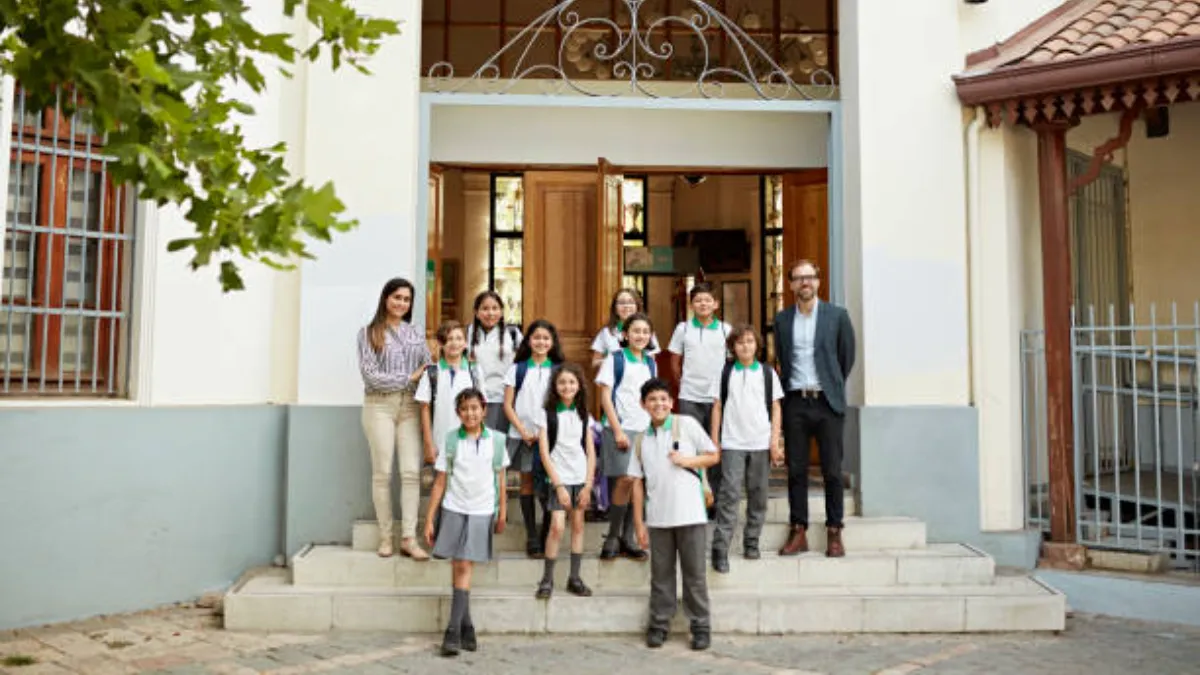
As international schools increasingly demand higher standards for brand building and product quality, selecting a reliable school uniform manufacturer has become a critical factor in the success of procurement projects.
Firstly, the supplier should possess extensive experience in school uniform production, understand the characteristics of different product categories for international schools, and provide reasonable customization solutions based on the school’s needs. From product development to mass production, excellent communication is essential at every stage to ensure the final product meets the school’s design requirements.
Secondly, the breadth of the product range is also an important consideration. International schools typically don’t purchase single products; instead, they aim to establish a complete school uniform system, including multiple lines such as polo shirts, shirts, trousers, skirts, and sportswear. A school uniform supplier capable of covering a wide range of product categories can help schools manage procurement uniformly while maintaining a consistent overall design style.
Furthermore, whether the supplier supports OEM and ODM school uniforms is a key concern for many international schools. Different schools have different brand positioning and campus cultures, thus requiring product development tailored to their specific needs, rather than simply purchasing standardized products.
Final Thoughts
For international schools, high-quality school uniforms not only create a unified campus image but also reflect school culture, enhance students’ sense of belonging, and meet the needs of different teaching scenarios and long-term use. Through professional school uniform customization, schools can create uniform series that align with their brand positioning, while improving procurement management efficiency and ensuring stable long-term supply.
As a professional school uniform manufacturer, Hangzhou-Kleidung is committed to providing high-quality custom school uniform solutions to international schools, educational institutions, brands, and distributors worldwide. Contact our team to discuss your school’s specific requirements and get your samples on the way.




 German
  English
  French
  Portuguese
  Hindi
Hindi  Italian
  Japanese
  Korean
  Spanish
  Arabic
  Russian