
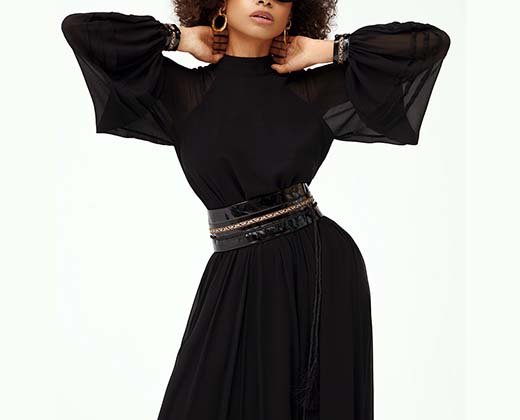
Choosing between a midi dress and a maxi dress depends on your target customers, fashion trends, and the occasions they are designed for. This guide compares both dress styles by length, silhouette, fabric choices, and common uses to help brands, designers, and fashion lovers better understand their differences.
What Is A Midi Dress
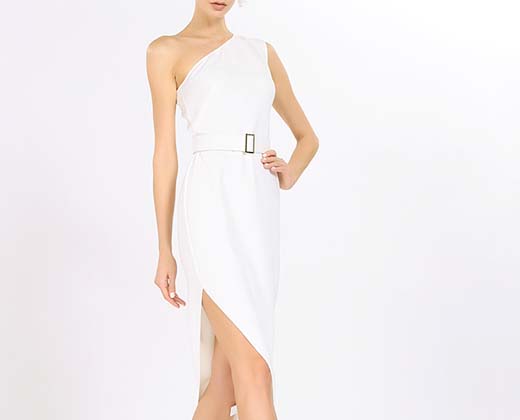
A midi dress is defined by its hemline falling between the knee and ankle. It’s a versatile wardrobe staple that balances elegance with everyday practicality.
The Core Definition: A Mid-Length Hemline
UN midi dress is defined by a hemline that falls between the knee and ankle, usually around the mid-calf area. As the middle option between mini and maxi dresses, it offers flexibility for different designs, from professional styles to casual and occasion wear.
Key Characteristics and Common Silhouettes
While the length is the main identifier, the midi dress isn’t a single style. It comes in a wide range of silhouettes that adapt it for different occasions, from the office to an evening out. The most common cuts include:
- Fitted / Bodycon: Features a close-fitting silhouette that follows the body’s shape and may include details such as slits for added movement and comfort.
- A-line: Fitted at the waist and then flares out gradually toward the hem, making it a highly versatile and flattering choice.
- Wrap: Uses a wrap-around design to create a defined waist that adapts to a variety of body shapes.
- Shirt Dress: Features a shirt-style top half combined with a midi skirt, a go-to for smart-casual and professional environments.
- Flared or Pleated: Adds extra volume and movement to the lower half for a more dynamic shape.
What Is A Maxi Dress
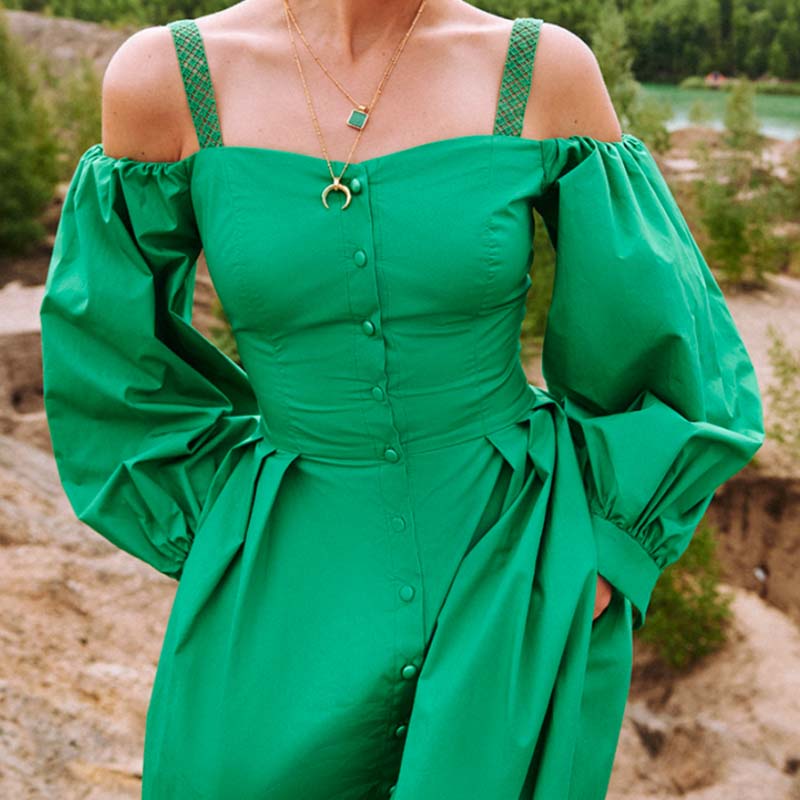
A maxi dress is a long dress reaching the ankles or floor. Its defining feature is length, often with a relaxed, flowing cut for versatility and comfort.
Core Definition: An Ankle-to-Floor Length
UN robe maxi is defined by its length. The hemline goes all the way to the ankles, the tops of your feet, or even the floor. This is what separates it from a midi dress, which stops at the mid-calf. Most maxi dresses have a relaxed or flowing silhouette that makes them comfortable and easy to move in.
Key Characteristics and Common Styles
The term “maxi” is all about length, not one specific style. It’s a broad category covering a lot of ground, but a few things are common.
- The label applies to many cuts, including shirt dresses, boho styles, and halter-neck designs.
- Most designs either have a defined waist or work well with a belt to give shape to the long silhouette.
- It’s a flexible wardrobe staple that works for casual daytime wear just as well as for more formal evening events.
Bring Your Womenswear Designs to Life, Faster.

Main Differences Between Midi And Maxi Dresses
The difference between midi and maxi dresses goes beyond length. Midi dresses often feature structured silhouettes, while maxi dresses are known for flowing designs suitable for casual, resort, or occasion wear.
Length Differences
The most obvious difference comes down to the hemline, which directly impacts the overall look and feel.
- A midi dress hem stops somewhere between the knee and ankle, typically around the mid-calf. This cut intentionally exposes the lower leg and puts your shoes on display.
- A maxi dress hem extends to the ankle or can even graze the floor. The goal is to create a long, continuous silhouette with a dramatic, sweeping effect.
- The shorter hem of a midi highlights your footwear. The longer hem of a maxi uses its extra fabric to create a more fluid, eye-catching movement when you walk.
Styling Differences
How you style the dress often depends on its built-in silhouette and intended vibe.
- Midi dresses usually have more structure. Think tailored Ligne A or sheath cuts that give off a polished, put-together feel.
- Maxi dresses are all about a relaxed, flowy silhouette. They drape loosely and provide a bohemian or romantic look without much effort.
- Your shoe choice naturally follows the dress’s lead. Midis pair well with heels or ankle boots to complement the tailored shape, but maxis are an easy match for flat sandals or wedges for casual comfort.
Occasion Differences
While not a hard rule, each dress length has its typical home turf.
- Midis are a solid choice for professional or semi-formal events. Their structured look makes them a reliable option for the office or a cocktail party.
- Maxis are strongly associated with casual settings. They are the default for beach days, music festivals, and any relaxed weekend get-together.
- But fabric can change the game. A midi is often seen as more formal, but a maxi dress made from an elegant material like silk or chiffon can easily be dressed up for a formal evening event.
Which Dress Is Better For Different Body Types
The best dress depends on your frame. Midis often balance proportions, while maxis excel at creating a long, flowing line for elongation and coverage.
Midi Dresses: Balancing Proportions for Different Shapes
The key to a midi dress is its length, which falls between the knee and ankle. This cut creates specific advantages for balancing different figures.
- Midi dresses work well for Petite body types, as the length avoids overwhelming a smaller frame.
- A-line, fit-and-flare, or wrap midi styles flatter Curvy, Pear, and Hourglass shapes by skimming curves without clinging.
- For Athletic or straight figures, a midi with waist definition or a fit-and-flare cut helps create the appearance of curves.
- The most effective midi length hits the slimmest part of your calf, which helps maintain a longer leg line.
Maxi Dresses: Creating Elongation and Flow
Maxi dresses extend to the ankle or floor, creating a strong vertical line that can be used to achieve a different set of flattering effects.
- Maxi dresses are a natural fit for Tall frames, emphasizing height with a strong, unbroken vertical line.
- Apple shapes benefit from maxi dresses with an empire or wrap waist, which defines the figure above the midsection.
- A well-fitted maxi with a defined waist can elongate Petite figures and create an hourglass silhouette on Curvy types.
- The continuous fabric of a maxi dress offers coverage and a flowing silhouette, perfect for a long, uninterrupted line.
Frequently Asked Questions
Which dress is better for short women, a midi or a maxi?
A midi dress is generally the more reliable and flattering choice for shorter women because it’s less likely to overwhelm a petite frame. It maintains better body proportions and showcases footwear, which can add visual height. A maxi dress can also work if it’s properly tailored to ankle length and has a defined waist and a slim silhouette.
Are midi dresses considered formal wear?
Yes, a midi dress can absolutely be formal. The level of formality depends entirely on its fabric, cut, and styling. A midi dress made from elegant materials like satin, silk, or lace with a tailored silhouette is appropriate for many formal events, including weddings and cocktail parties. It offers a modern alternative to traditional floor-length gowns.
Final Thoughts
For brands and retailers, choosing between midi and maxi dresses is about understanding customer preferences, seasonal demand, and collection positioning. A balanced product range allows businesses to offer styles suitable for different occasions and target markets.
For brands developing new collections, working with an experienced women’s dress manufacturer can help create customized midi and maxi dress styles based on market requirements. Explore our collection of midi and maxi dresses developed for different fashion markets. Contact our team to discuss wholesale supply, OEM/ODM services, and private label solutions for your brand.




 French
  English
  Portuguese
  Hindi
Hindi  Italian
  Japanese
  Korean
  Spanish
  Arabic
  German
  Russian