
The fashion industry offers several manufacturing models that help brands bring products to market efficiently. Among the most common options are OEM, ODM, and private label manufacturing. While these terms are often used interchangeably, they represent distinct business models with different levels of customization, design ownership, development responsibility, and production involvement.
As an experienced women’s clothing manufacturer, Одежда Ханчжоу provides OEM, ODM, and private label solutions, helping brands choose the most suitable production approach based on their business goals and market positioning.
What Is OEM In Fashion Manufacturing
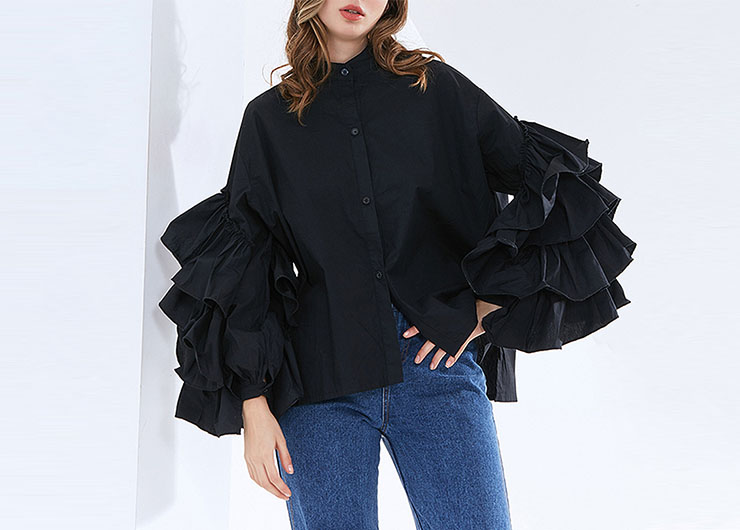
OEM means you provide the complete design blueprint—tech packs and specs—and a factory produces the garments for your private label. You control the design; they handle production.
In fashion, OEM (Original Equipment Manufacturer) is a straightforward deal: a brand brings its own original designs, tech packs, and material specifications to a factory. The factory then uses its equipment and supply chain to produce those garments under the brand’s private label. The brand owns the design and intellectual property, while the factory provides the manufacturing muscle. This model is the backbone for any brand that wants fully custom, “cut-and-sew” apparel without the headache and expense of owning a factory.
Key Features Of OEM
The OEM model is defined by a few core characteristics that separate it from other manufacturing options like ODM or CMT.
- Full Design Ownership: The brand provides and owns 100% of the design IP. The factory executes your vision and cannot legally sell your custom designs to other clients.
- High Level of Customization: You specify everything from the ground up. This includes custom silhouettes, fabric compositions, specific trims like zippers and buttons, and unique fit blocks. You are creating a product, not just picking one.
- Full-Package Service: A good OEM partner typically offers a full-package service. They handle material sourcing, pattern making, sampling, bulk production, quality control, and packing, all based on your tech pack.
- Higher Development Cost & Longer Lead Time: Building a product from scratch costs more and takes longer than picking a ready-made style. Expect to invest in multiple sampling rounds and a lengthier development cycle.
- Higher MOQs: Factories often require higher Minimum Order Quantities for OEM projects. This is because custom fabric runs, dye lots, and unique production setups are inefficient at a small scale.
Advantages And Disadvantages Of OEM
OEM gives you ultimate control, but that control comes with significant responsibilities and risks. It’s a trade-off between uniqueness and operational burden.
Advantages
- Complete Product Control: Your vision for fit, fabric, and construction is executed precisely, ensuring strong brand identity.
- Unique, Differentiated Products: Your garments are exclusive. This protects you from price wars on identical products and allows for premium positioning.
- Leverage Manufacturing Expertise: You get access to professional supply chains, technical skills, and production efficiency without the capital investment of owning a factory.
- Focus on Brand-Building: Outsourcing production lets you concentrate your resources on what you do best: design, marketing, and sales.
- Scalability: As your brand grows, a reliable OEM partner can scale production capacity to meet demand for your core styles.
Disadvantages
- Higher Upfront Costs: You have to pay for design, tech pack development, and multiple sample rounds before you even place a bulk order.
- Increased Inventory Risk: Higher MOQs mean a larger upfront investment in stock. If a style fails, the financial hit is bigger.
- Requires Technical Skill: The OEM process only works if your brand can produce accurate tech packs and competently manage fit and quality approvals. It’s not for beginners.
- Dependence on the Factory: Your business is at the mercy of your manufacturer. Their production delays, quality failures, or compliance issues directly impact your brand.
- Risk of IP Leakage: Although you own the design, weak contracts or untrustworthy partners can lead to your unique styles being copied.
What Is ODM In Fashion Manufacturing
ODM lets you pick factory-designed garments and rebrand them as your own. It’s built for speed and low upfront cost, not for creating a one-of-a-kind product.
Key Features Of ODM
In an Original Design Manufacturing (ODM) setup, the factory isn’t just an assembly line; it’s also your design partner. They’ve already done the hard work of creating market-ready apparel styles.
- Factory-developed designs: The manufacturer creates collections of original garment designs, patterns, and samples. You pick from their catalog instead of designing from zero.
- Limited customization: You select a base design and then modify it with your own colors, fabrics, prints, and branding. The core silhouette usually stays the same.
- Turn-key process: The ODM factory manages the entire workflow. This covers design, material sourcing, bulk production, and quality control, all under one roof.
- Shared IP: The manufacturer retains the intellectual property for the core design. You own the final, branded inventory you paid for, but the factory can sell variations of that base design to other brands.
Advantages And Disadvantages Of ODM
The main draw of ODM is speed. It allows you to get product to market much faster and with lower development costs because the design work is already done. This makes it a solid choice for startups or for brands that need to respond to trends quickly. The smaller minimum order quantities (MOQs) also reduce financial risk. The trade-off is a lack of originality. Since other brands can use the same base styles, your products won’t be completely unique. You’re also limited in how much you can customize the garment compared to building a product from scratch.
Flexible, Fast & Reliable Womenswear Manufacturing

What Is Private Label In Fashion
Private label lets a brand sell factory-made apparel under its own name. It’s a trade-off: you get higher margins and exclusivity but also take on all inventory risk.
How Private Label Works
The process is straightforward. A brand defines what it wants to make and finds a manufacturing partner who can meet its standards. From there, it’s a four-step process.
The brand leads product development, customizing everything from fabric and fit to colors and trims. This can mean modifying a manufacturer’s existing styles (ODM) or creating completely unique designs from scratch (OEM).
Samples are reviewed and approved for quality. Once the brand signs off, the manufacturer is cleared for bulk production.
The factory produces the order, and the finished garments are branded exclusively with the brand’s own labels, tags, and packaging.
The completed, branded products are shipped to the brand for retail.
Advantages And Disadvantages Of Private Label
The private label model offers significant upsides, but it comes with real risks that can’t be ignored.
The biggest advantages are financial and strategic. You get higher profit margins, total control over your pricing, and exclusive products that build a unique brand identity.
You can also move fast, reacting quickly to market trends and filling gaps in your product line with custom pieces when you see an opportunity.
The main drawback is inventory risk. Every unsold piece is your responsibility, which can lead to costly markdowns if you misjudge demand.
It also requires more upfront capital, hands-on operational management, and a heavy reliance on the quality and reliability of your manufacturing partner.
How To Choose The Right Model For Your Business
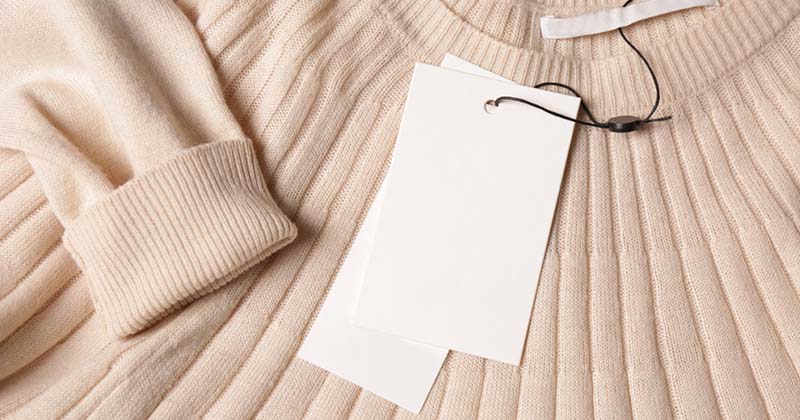
Startups should begin with ODM to test the market cheaply. Mature brands use OEM for signature products and a hybrid model to balance cost, speed, and differentiation.
Map Your Business Stage to a Starting Model
Your stage of business is the single biggest factor in this decision. There’s a clear path that most successful brands follow, and it’s about managing risk. If you’re a startup, creator-led brand, or just testing an idea, ODM or a private label service based on ODM is almost always the right call. It minimizes your upfront development costs and gets product to market in weeks, not months. You can validate demand without betting the farm on a custom design that might not sell.
The time to consider OEM is when you have an established brand with in-house design resources or a unique product idea that is central to your entire brand. If your differentiation comes from a proprietary fit or unique construction, you need the control that OEM provides. For a startup, this only makes sense if you’re well-funded and your core value proposition is the unique product itself, not just the branding around it.
Once you are scaling for wholesale or mass retail, the game changes again. You’ll likely move your core, repeatable styles to an OEM model to lock in your IP and control quality at scale. But that doesn’t mean you abandon the other models.
Use a Hybrid Model for a Diverse Product Portfolio
Sophisticated brands don’t choose just one model; they use a hybrid approach based on the product’s role in their portfolio. This lets you balance the need for brand differentiation with the need for speed and cost efficiency. It’s about using the right tool for the right job.
- Signature or Core Products: These are your brand-defining pieces with unique fits, fabrics, or silhouettes. You use OEM for these. You need full control and design ownership to protect your intellectual property.
- Seasonal or Trend-Led Capsules: For styles you need to get to market quickly to catch a trend, ODM is the clear winner. It lets you test new ideas and expand your range without the long development cycle and higher cost of OEM.
- Entry-Price Basics: For commodity items like basic t-shirts, hoodies, or leggings, a simple Private Label or ODM catalog approach is most efficient. The focus here is cost and speed, not deep differentiation.
Mixing these models allows you to invest heavily in the products that define your brand while using faster, cheaper methods to fill out your assortment and react to the market. This is how you stay competitive without blowing your budget on developing products that don’t need to be unique.
Final Thoughts
The real question isn’t OEM vs. ODM, but how to build a strategic production portfolio. Relying on a single model exposes your brand to either crippling inventory risk or market irrelevance. The hybrid approach is the only proven framework to balance brand identity with capital efficiency as you scale.
Your next production run is the first opportunity to implement this strategy. Contact our team to review your product roadmap and build a production plan that protects your margins and accelerates growth.
Frequently Asked Questions
Which is cheaper for fashion, OEM or ODM?
ODM is generally cheaper for starting a brand or testing new product lines. It eliminates design development costs and typically allows for smaller orders. OEM can become more cost-effective per garment, but only at high production volumes, as the initial investment in design, patterns, and sampling is significant. For most new businesses, ODM offers a lower-cost and lower-risk entry.
Can I use an OEM factory for my private label brand?
Yes. “Private label” is a business model where you sell products under your own brand name. “OEM” is a manufacturing process where a factory produces items based on your unique designs. When you hire a factory to make your original designs and sell them with your branding, you are running an OEM-based private label business. This approach gives you a completely unique product.
As a fashion startup, which model is better: OEM or ODM?
Most startups should begin with ODM. This model is faster, requires less upfront capital, and has lower minimum order quantities (MOQs), reducing financial risk while you test the market. Once your brand gains traction and you have a better understanding of your customers, you can transition to the OEM model to develop signature products that are unique to your brand.




 Russian
  English
  French
  Portuguese
  Hindi
Hindi  Italian
  Japanese
  Korean
  Spanish
  Arabic
  German