
Securing the right import clothing documents China isn’t administrative work; it’s a direct defense against customs penalties that destroy profit margins. A single data mismatch between the commercial invoice and bill of lading triggers costly detentions, demurrage fees, and potential seizure of goods, turning a profitable order into a financial liability.
This analysis details the critical documents for every stage, from supplier verification to customs clearance. We specify how to align data across your commercial invoice, packing list, and bill of lading to satisfy customs audits and prevent your shipment from getting flagged at the port.
Why Accurate Documentation is Non-Negotiable in Clothing Imports
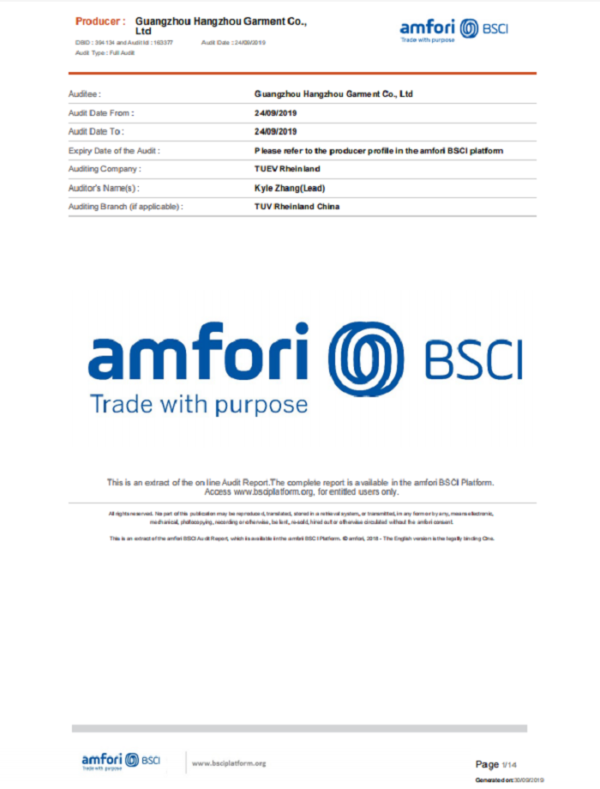
In clothing imports, documentation errors aren’t minor issues. They directly cause costly delays, customs penalties, and even seizure of goods, making accuracy a non-negotiable part of the business.
How Inaccuracies Trigger Delays, Penalties, and Scrutiny
Customs authorities are trained to spot discrepancies. They actively review documents for common errors like misclassifying a garment, undervaluing a shipment, or declaring an incorrect country of origin. Getting it wrong leads to serious and expensive consequences.
- Importers who can’t produce evidence to support their claims face potential civil penalties under 19 U.S.C. §1592.
- Incorrect origin information on textiles is a major red flag that can get your merchandise detained or excluded, wrecking seasonal supply chains.
- Even simple mistakes snowball into higher operational costs from demurrage, unplanned storage fees, and the financial damage of missed retail deadlines.
Aligning Key Documents to Avoid Discrepancies
The best way to avoid scrutiny is to ensure every core document tells the exact same story. Customs treats any mismatch between these papers as a signal that something is wrong, which immediately slows down the clearance process.
- The commercial invoice, packing list, and bill of lading must be perfectly consistent. Descriptions, quantities, and values have to match across all three.
- The country-of-origin declaration is especially critical for apparel. You must be able to back it up with production records, such as cutting and sewing tickets from the factory.
- Your declared value must be complete. This means including any dutiable elements like assists, supplemental payments, or commissions. Leaving them out is considered an incorrect valuation.
Core Documents for Every Clothing Import Order
Every clothing import relies on three core documents: the Proforma Invoice, Commercial Invoice, and Packing List. Mismatches between them are the top cause of customs delays and penalties.
| Document | Primary Role |
|---|---|
| Proforma Invoice (PI) | A preliminary ‘contract snapshot’ issued by the supplier before production. It confirms order details, unit prices, and payment terms, serving as the baseline for the transaction and for initiating payment or production. |
| Commercial Invoice (CI) | The final, official sales document used by customs authorities to assess duties and taxes. It legally declares the transaction value, detailed product descriptions, HS codes, and country of origin for clearance. |
| Packing List (PL) | An inventory document detailing the physical contents and packing specifications of the shipment. It breaks down quantities, weights, and dimensions by carton, used for customs verification and warehouse receiving. |
Your Partner for Flexible Womenswear Manufacturing

Key Supplier-Side Documents to Request
Verifying a supplier’s legal status, material safety, and quality control through key documents is critical for preventing costly production and compliance disasters down the line.
Business License and Certifications
Before you send a deposit, you need to confirm you’re dealing with a legitimate, registered business. These initial checks are your first line of defense against fraud and sourcing from a company that isn’t legally equipped for manufacturing or export.
- Chinese Business License (营业执照): Request a clear scan. This document confirms the supplier is legally registered and its business scope aligns with your needs, such as manufacturing versus just trading.
- Quality and Safety Certifications: Ask for relevant certificates like ISO 9001, which shows they have a quality management system, or OEKO-TEX for textile safety. These aren’t just for show; they indicate a baseline level of process control.
- Cross-Verification: The company name, address, and legal codes on these documents must match the details on your purchase orders and invoices. Any mismatch is a major red flag for potential payment fraud.
Fabric Composition & Test Reports
What’s actually in the fabric is a legal and quality issue. You need hard proof that the material meets labeling requirements for your target market and is safe for consumers. Relying on the supplier’s word alone is a bad strategy.
- Specification Sheets and BOM: Get detailed fabric specs and a Bill of Materials (BOM). This is non-negotiable for verifying fiber content, which is a legal requirement for labeling in markets like the US and EU.
- Third-Party Lab Reports: Request recent test reports from a reputable lab. These should cover key metrics like colorfastness, shrinkage, and chemical safety (e.g., Azo dyes, formaldehyde) to prove the product performs as expected and is safe.
- Contingent Shipment for High-Risk Goods: For items like children’s wear, make final payment and shipment contingent on passing test reports that meet specific regulations, such as the US CPSIA or EU REACH.
Quality Control (QC) Inspection Reports
You can’t fix quality issues once the goods are on a container. Inspection reports give you an objective look at the production quality before you approve the shipment and release final payment. They are your eyes on the factory floor.
- Internal vs. Third-Party Reports: Ask for the supplier’s internal QC records, but always arrange for your own third-party Final Random Inspection (FRI) for an unbiased assessment before shipment.
- Data-Driven Decisions: These reports provide hard data on workmanship defects, measurement accuracy against your specs, and correct labeling and packaging. This isn’t about feelings; it’s about facts.
- AQL-Based Actions: Use the report’s findings, which are based on Acceptance Quality Limit (AQL) standards, to make a clear decision: approve the shipment, demand rework, or negotiate a discount for minor issues.
Essential Buyer-Side and Financial Documents
Your Purchase Order sets the rules for the transaction. Your proof of payment shows you followed them. Both documents must be precise and consistent to avoid problems.
Purchase Order (PO)
The Purchase Order isn’t just a request—it’s the formal offer from you, the buyer, that locks in all the commercial terms. This document acts as the foundation for other key paperwork, including the commercial invoice and packing list. For apparel, a PO must get incredibly specific, detailing style numbers, color codes, size breakdowns, fabric composition, and labeling requirements. It serves as the main reference point for quality control inspections and is your primary tool for resolving any disputes about quantity or product specs once the goods arrive.
Proof of Payment (e.g., T/T Receipt or L/C)
This is your hard evidence to suppliers, banks, and customs that you’ve paid for the goods. A Telegraphic Transfer (T/T) receipt is a simple bank record of a wire transfer, commonly used for payment structures like a 30% deposit and 70% balance. A Letter of Credit (L/C) is more formal. It’s a guarantee from a bank to pay the supplier once specific documents, like the Bill of Lading, are presented. This adds a layer of security for both you and the supplier. You must keep your payment records perfectly aligned with the PO and commercial invoice to create a clear financial trail for audits and dispute resolution.
Final Thoughts
Importing apparel is not just about finding a supplier; it’s about executing a precise documentation strategy. The documents outlined here are your primary defense against customs penalties, production errors, and severe margin erosion. Treating this process as a non-negotiable checklist is what separates professional importers from businesses that fail.
Don’t leave your supply chain to chance. We can help align your sourcing strategy with these documentation requirements to ensure every shipment clears smoothly. Contact our team to build a secure sourcing and compliance plan for your next order.




 Russian
  English
  French
  Portuguese
  Hindi
Hindi  Italian
  Japanese
  Korean
  Spanish
  Arabic
  German