
An effective abaya size guide is the primary tool for wholesalers and e-commerce sellers to reduce the return rates that directly erode profit margins. Relying on inconsistent supplier data or standard dress sizes leads to costly dead stock and operational drag from customer complaints.
In this article, we examined the main indicators, including the waist circumference length measured in inches that matches the wearer’s height, as well as the secondary chest and hip measurements to ensure a proper drape, reduce returns, and protect your inventory investment.
Why Correct Abaya Size Matters
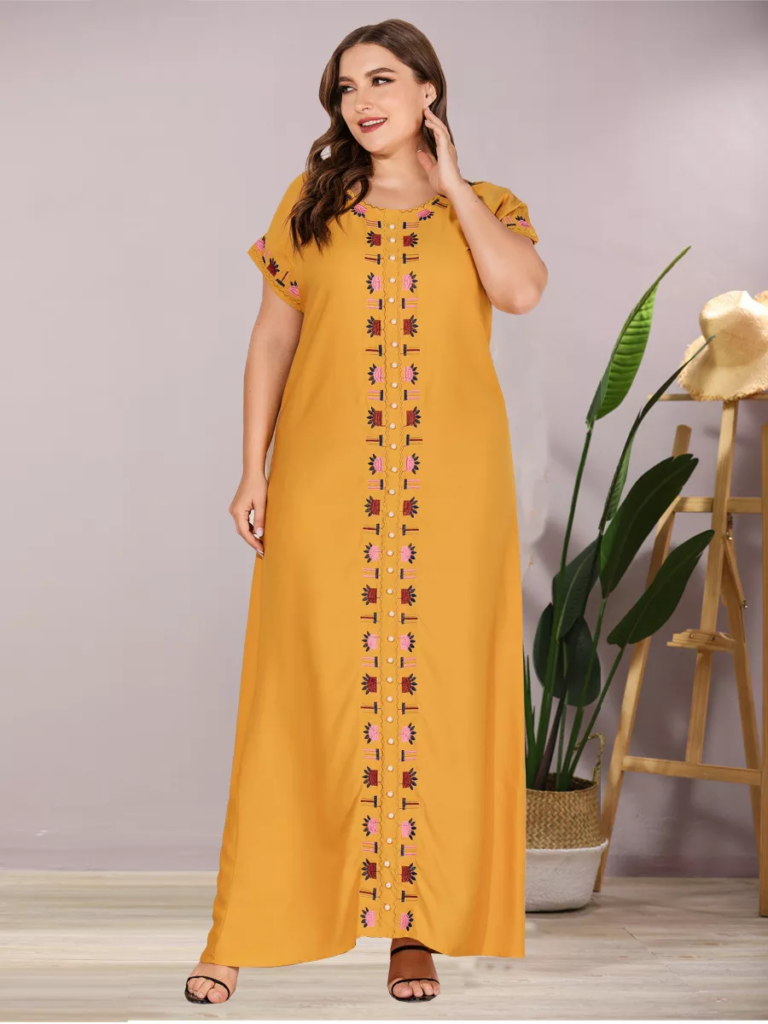
Getting abaya size right ensures modest coverage, comfort, and the intended drape. It also prevents trips and extends the garment’s lifespan, impacting everything from aesthetics to safety.
Supporting Modest Coverage and Daily Comfort
The primary function of an abaya is to provide loose, non-revealing coverage. Correct sizing is fundamental to achieving this. An abaya that’s too small will cling at the chest, waist, or hips, outlining the body’s curves and undermining the principle of modesty. Similarly, a length that’s too short exposes the ankles and lower legs more than intended, especially during movement like walking or sitting.
Comfort for daily wear depends on freedom of movement. A correctly sized abaya gives you enough room in the shoulders, sleeves, and hips to walk, reach, and sit without fabric pulling tight. This is also practical for layering clothes underneath without feeling constricted. An overly large abaya creates its own problems, as excess fabric can feel heavy, trap heat, or snag on objects like door handles.
Maintaining the Intended Look and Garment Life
An abaya’s aesthetic is defined by its clean, graceful drape. When the size is wrong, that intended look is lost. A tight fit causes fabric to pull and wrinkle at stress points, making the garment appear strained and informal. An abaya that’s too long creates a messy, “swamped” look with fabric pooling at the hem, which is also a serious tripping hazard.
Proper sizing also directly impacts how long the garment lasts. If the hem drags on the ground, it will collect dirt and fray quickly, requiring frequent repairs. If the abaya is too tight across the shoulders, bust, or hips, the seams are put under constant stress. This makes them far more likely to rip or distort over time. A good fit distributes wear evenly, significantly extending the life of the abaya.
Understanding Standard Abaya Size Systems
Abaya sizing is all about length, which matches your height. Width provides the modest drape, but don’t expect it to convert perfectly to international dress sizes.
Height-Based Abaya Sizing
The most common system for abaya sizing is based on length in inches. The size number you see, like 54, 56, or 58, directly represents the garment’s length from the shoulder down to the hem.
To find your size, just measure from the highest point of your shoulder straight down to your ankle. That measurement in inches is the abaya size you should look for.
Since abayas are designed to be flowy, your height is the most important measurement. If you plan to wear heels, it’s a good idea to choose one size up so the length still looks right.
Width And Fit Measurements
While length determines the size number, width is what creates the modest and comfortable drape. A standard abaya is always cut generously to avoid a tight, clingy fit.
As the abaya length increases, the width around the bust and hips usually increases too. This proportional scaling helps the garment maintain a balanced silhouette on taller individuals.
Many brands now offer different fits to accommodate various body shapes within the same length-based system. You will often see options like:
- Standard: The classic, generous cut.
- Slim: A more tailored cut that is narrower but still modest.
- Plus: A cut with significantly more room in the bust and hips for the same length.
International Size Conversion Standards
Don’t expect a direct, one-to-one conversion between abaya sizes and international systems like US, UK, or EU sizes. The loose fit means a single abaya size can comfortably fit a range of standard dress sizes.
Brands sometimes provide charts that map an abaya size to an approximate international range. For example, a chart might link size 56 to UK sizes 12–14. Use these as a rough guide, not a strict rule.
For the best fit, always rely on your own measurements. First, figure out your correct length. Then, check the abaya’s specific bust and hip measurements to ensure it provides enough room for a modest and comfortable fit.
Launch High-Quality Collections Faster Than Ever

How To Measure For The Right Abaya Size
Abaya sizing starts with length (based on your height), then checks bust and hip width against a brand’s chart to ensure a modest, loose fit.
The Three Core Measurements
Getting the right fit boils down to three key numbers. Abayas are primarily sized by length, which is determined by your height. Bust and hip measurements are secondary checks to ensure the garment drapes correctly and doesn’t cling. Forget your standard dress size—it’s irrelevant here.
| Measurement | How to Take It | Why It Matters |
|---|---|---|
| Length (from Height) | Measure from the highest point of your shoulder straight down to your ankle or heel. The measurement in inches is your target abaya size (e.g., 56 inches = Size 56). | This is the primary sizing metric. Too short compromises modesty; too long is a trip hazard. This gets you into the right ballpark. |
| Bust / Chest | Wrap a soft tape measure around the fullest part of your bust, keeping the tape level. Don’t pull it tight. | This confirms the abaya won’t pull or cling across your chest. The garment’s measurement should be several inches larger than your body measurement. |
| Hips | Measure around the widest part of your hips and seat. Again, keep the tape level and comfortably snug. | This ensures you have enough room to walk and sit without the fabric stretching tight, preserving the intended loose, flowing silhouette. |
Matching Measurements to Size Charts
Once you have your numbers, you need to interpret the supplier’s size chart. They are not universal, so always check the chart for the specific abaya you’re buying.
- Start with Length: Your shoulder-to-ankle measurement directly points to your base size. A 5’4″ person will typically look at a Size 54, and a 5’6″ person will look at a Size 56.
- Verify Width and Ease: Check your bust and hip measurements against the chart for your chosen length. Look for a garment measurement that is at least 2 to 5 inches larger than your body measurement. This difference is called “ease,” and it’s what gives the abaya its modest, non-clinging drape.
- Check the Fit Type: Many brands offer “Regular Fit” and “Slim Fit.” A slim fit abaya will have the same length but will be narrower across the bust and hips. If you have a broader frame, a Slim Fit will likely be too tight, even if the length is correct.
- When in Doubt, Size Up: If your height or measurements put you between two sizes (e.g., you are 5’5″ and could wear a 54 or 56), the standard industry advice is to choose the larger size. It’s far easier to hem an abaya that is slightly too long than it is to add length or width to one that’s too small.
Common Abaya Sizing Mistakes To Avoid

Most sizing mistakes happen when you treat abayas like standard dresses. Sizing is about length matching your height, not your usual dress size. Get the length right first.
Getting abaya sizing wrong is a fast track to costly returns and unhappy customers. The system is different from standard apparel, and buyers often make the same few preventable errors. Knowing what to watch for is half the battle.
Using the Wrong Measurements
The most basic errors start with the tape measure. People often measure the wrong thing or rely on numbers that don’t apply to abayas.
- Relying on standard dress sizes. This is the number one mistake. An abaya’s size (e.g., 52, 54, 56) is its length in inches, not a dress size. A single abaya size is designed to be loose and can often fit a wide range of body types, like UK sizes 8 through 14. Your dress size is almost irrelevant; your height is what matters.
- Ignoring the height-to-length match. Choosing a length that doesn’t correspond to your height is a guaranteed problem. Too short, and the abaya exposes the ankles, ruining the intended silhouette. Too long, and the hem drags on the ground, creating a tripping hazard and quickly destroying the fabric.
- Failing to measure correctly. The correct way to determine length is to measure from the mid-point of the shoulder straight down to the heel. Not from the neck, and not just guessing based on total height. This single measurement is the most critical piece of data for getting the right size.
- Overlooking sleeve length. A focus on total length can cause people to forget the sleeves. A perfect hemline doesn’t help if the sleeves are too short, exposing the wrists and compromising modesty, or if they’re too tight and restrict arm movement.
Ignoring Context and Style
Even with the right body measurements, ignoring how and where the abaya will be worn leads to poor fit.
- Forgetting about shoe height. An abaya that fits perfectly with flat shoes can look awkwardly short with heels. The industry standard is to go up one size in length (e.g., from a 54 to a 56) if you plan on regularly wearing heels.
- Not checking the brand’s specific size chart. There is no universal standard for abaya width and cut. A “size 56” from one brand can have completely different bust, hip, and sleeve measurements than a “size 56” from another. Always check the brand’s specific chart before buying.
- Assuming all abaya cuts fit the same. A slim-fit abaya is cut narrower and offers less room than a traditional A-line or butterfly cut. You can’t assume your usual size ’54’ will fit correctly if you switch from a loose-fit to a tailored style. The cut dictates how the fabric drapes on your frame.
- Disregarding the fabric type. The material directly affects the fit. A heavy, structured fabric will hang differently than a lightweight, flowy material. A non-stretch fabric requires more sizing allowance, while a fabric with some give can be more forgiving. The same pattern cut in two different fabrics will not fit identically.
Size Recommendations For Wholesale Buyers
For wholesale, build your order around regional height profiles. Always get the supplier’s specific size chart to connect length (e.g., 54) to alpha sizes (e.g., Medium).
Choosing Between Length-Based and Alpha Sizing
The abaya industry primarily runs on a length-based system. Sizes like 52, 54, or 56 directly correspond to the garment’s length in inches, measured from the shoulder. This is the standard you’ll find in traditional wholesale, where a size 52 is intended for a customer who is roughly 5’2″.
Some suppliers are now mapping these lengths to alpha sizes (S, M, L, XL) to make things easier for retailers. In this system, a “Medium” might be equivalent to a size 52 or 54. This is where you can get into trouble. Don’t assume a Medium from one supplier is the same as a Medium from another.
Before you place any bulk order, get the supplier’s specific measurement chart. You need to see exactly how they connect their alpha sizes to the real-world measurements of length, shoulder, and bust. Confirm this on paper before committing capital.
Building Your Order with Regional Size Packs
Your size distribution should directly reflect your target market. Don’t buy a generic spread; tailor it to local customer demographics to avoid dead stock.
- For Middle Eastern markets: Build your inventory around sizes 54 and 56. These are your top sellers. A safe starter pack for a single style often looks like this: 2 pieces of size 52, 4 pieces of size 54, 4 pieces of size 56, 3 pieces of size 58, and 1 or 2 pieces of size 60.
- For Asian markets: You need to shift your inventory toward smaller sizes. Customer heights are generally lower, so focus your ratios on sizes 52 and 54 to match local demand.
- For Western markets: These markets are diverse, so you’ll need a more balanced range from 52 to 58. Even so, distribute your order to be heaviest across the core sizes of 54 and 56, as they tend to perform well consistently.
Final Thoughts
Relying on generic alpha sizes is the fastest way to accumulate dead stock and unhappy customers. Success in this business requires mastering the length-based sizing system outlined here. This standard is your only defense against costly returns and inventory risk.
Don’t risk investing money based solely on the size chart. Please verify the fit and fabric quality in person. We recommend that you order our core size samples first to experience the size and quality for yourself. Please contact our team to discuss a tailored size set solution for your target market.
Frequently Asked Questions
How are abayas measured?
Abayas are primarily sized by their length in inches, which corresponds directly to the wearer’s height. For example, a ‘size 54’ abaya is approximately 54 inches long and is generally recommended for someone who is 5’3″ to 5’4″ tall. While length is the main factor, other key measurements like bust, waist, hips, and sleeve length are also used to ensure a proper and modest fit. Garment measurements are always larger than body measurements to provide a comfortable, loose drape.
What size abaya should I buy?
Start by matching your height to the recommended abaya length (e.g., 5’6″ height typically corresponds to a size 56 abaya). Next, consider your footwear; if you plan to wear heels, it’s best to choose one size up to maintain a long, flowing look. Finally, check your bust and hip measurements against the brand’s size chart. Ensure the abaya’s measurements are at least 2-5 inches larger than your body measurements for a modest, comfortable fit. If you fall between two sizes, opt for the larger one for better coverage.
Are abaya sizes universal?
No, abaya sizes are not universal. While many brands use a similar sizing system based on length (e.g., sizes 52, 54, 56), the exact measurements for bust, hips, and sleeve length can vary significantly from one brand to another. Different fits like ‘slim’ or ‘loose’ also affect the sizing. For this reason, always refer to the specific size chart provided by the brand before making a purchase.




 English
  French
  Portuguese
  Hindi
Hindi  Italian
  Japanese
  Korean
  Spanish
  Arabic
  German
  Russian