
A high-quality school uniform needs to withstand prolonged wear, frequent washing, and various school activities. Insufficient fabric durability not only affects students’ wearing experience but also increases replacement costs for schools and parents. In contrast, using durable school uniform fabrics effectively extends product lifespan and helps brands build a positive market reputation.
This article will focus on why durable school uniform fabrics are crucial for school uniform production and several key aspects to consider during the procurement process.
Why Fabric Durability Matters For Schools And Parents

School uniforms are frequently used garments, and their durability requirements are higher compared to regular fashion clothing.
Meeting Students’ Long-Term Wear Needs
Students wear school uniforms daily for learning, sports activities, and school life; therefore, these uniforms need to possess good durability and stability.
Using durable school uniform fabrics helps uniforms maintain their good appearance over long-term use, reducing wear, deformation, or pilling caused by frequent wear, thus extending the product’s lifespan.
For schools, this means students can use the same uniform throughout the entire semester or even longer, improving overall efficiency.
Reducing Parents’ Replacement Frequency
Parents typically want school uniforms to last their children a long time, rather than requiring frequent replacements.
Choosing durable school uniform fabrics helps uniforms maintain good wear resistance, preserving their overall condition even after repeated washing. This not only increases customer satisfaction but also reduces long-term expenses for families purchasing school uniforms.
Enhancing School Procurement Value
Schools often use a centralized procurement model, purchasing large quantities at once; therefore, product quality directly impacts procurement effectiveness.
If school uniforms maintain consistent quality over a long period, it not only reduces subsequent replenishment purchases but also helps schools establish a unified and tidy campus image. Therefore, in the procurement process, more and more educational institutions are focusing on durable school uniform fabrics, hoping to enhance the overall value of their purchases through high-quality materials.
Build Long-term Brand Reputation
For school uniform brands and wholesalers, product durability directly impacts market reputation.
When end customers use products for extended periods, brand trust is more easily established, increasing repeat purchase rates. Therefore, consistently using durable school uniform fabrics not only enhances product competitiveness but also helps brands establish a solid foundation for long-term, stable development.
Main Factors Affecting School Uniform Durability
Factors affecting the durability of school uniforms include not only the fabric itself, but also the fiber composition, weight, and manufacturing process.
Fiber Composition
Fiber composition is a crucial foundation for determining the performance of durable school uniform fabrics.
Different fibers possess different wearing characteristics, abrasion resistance, and daily care requirements. Therefore, during school uniform development, it’s essential to select fabrics appropriately based on product positioning.
In actual product development, buyers typically consider the following factors:
- Product positioning
- Wearing comfort
- Daily maintenance needs
- Usage environment
- Target market preferences
Different fabrics have different characteristics; therefore, it’s recommended to communicate thoroughly with manufacturers during the product development phase to select durable school uniform fabrics that align with brand requirements.
Fabric Weight and Thickness
Besides fiber composition, fabric weight and thickness are also crucial factors affecting durable school uniform fabrics.
Appropriate weight helps school uniforms maintain better shape stability while ensuring wearing comfort.
Purchasing needs vary across different regional markets.
- Warmer climates typically prioritize lightweight comfort.
- Cooler climates may prioritize warmth.
- Year-round school uniforms require a balance between comfort and durability.
Therefore, when developing school uniform products, fabric thickness should be selected appropriately based on the target market, rather than simply pursuing thicker or lighter products.
Stitching and Construction Quality
Besides the fabric itself, stitching quality is also a crucial factor affecting the final performance of durable school uniform fabrics.
Even with high-quality fabrics, poor manufacturing processes can compromise the overall durability of the product.
High-quality school uniforms typically prioritize the following aspects:
- Even and neat stitching
- Strong seams
- Reinforced key stress areas
- Stable overall manufacturing process
For mass production projects, a consistent manufacturing process ensures consistent quality across different batches, a key consideration for brands seeking long-term partnerships.
Fast, Flexible Production for Your Brand

Comparing Durable Fabric Options For School Uniforms
In the global school uniform sourcing market, different schools, brands, and distributors have varying requirements for product performance; therefore, there is no single fabric solution suitable for all projects.
Buyers should consider the entire product lifecycle, rather than focusing solely on price. Durability, comfort, ease of maintenance, and product consistency should all be included in the procurement evaluation.
Choosing the Right Fabric Based on Product Positioning
Different schools have different positioning for their school uniforms, thus requiring different choices of durable school uniform fabrics.
- Basic school uniform series prioritize durability and ease of daily maintenance.
- high-end school uniform series typically focus more on wearing comfort, fit, and overall quality.
- International schools or branded school uniform projects may prioritize product appearance consistency and brand image.
Therefore, when developing a product plan, buyers are advised to clearly define the product positioning in advance and then determine suitable durable school uniform fabrics based on the needs of the target market.
Balancing Comfort and Durability
School uniforms are worn daily by students, therefore a balance must be struck between comfort and durability.
Prioritizing durability at the expense of wearing comfort may negatively impact students’ daily experience; conversely, overemphasizing softness at the expense of durability may shorten the uniform’s lifespan.
Therefore, when selecting durable school uniform fabrics, the following aspects should be considered:
- Is the fabric suitable for long-term wear?
- Is it easy to wash and care for?
- Can it maintain a good appearance?
- Does it meet the needs of the target market consumers?
Through comprehensive evaluation, buyers can develop school uniform products that balance quality and market competitiveness.
Adjusting Product Solutions Based on Regional Needs
Climate conditions, school environments, and wearing habits vary across the globe; therefore, the selection of durable school uniform fabrics should be tailored to specific needs.
In warmer climates, breathability and comfort are typically prioritized; regions with significant temperature variations may place greater emphasis on year-round suitability; some schools purchase different uniform series for spring/summer and autumn/winter, thus requiring different fabric options.
Maintaining consistency across batches
For long-term projects, product consistency is also a crucial procurement criterion.
Schools often need to purchase the same product series for several consecutive years, therefore, a high degree of consistency is required in color, fabric, and fit.
Stable, durable school uniform fabrics not only help schools maintain a unified image but also facilitate continuous restocking for brands, reducing after-sales issues caused by product discrepancies.
Therefore, when selecting a manufacturing partner, it is essential to consider their stable supply chain and continuous production capacity to ensure long-term supply quality.
How Durable Fabrics Reduce Long-Term Costs
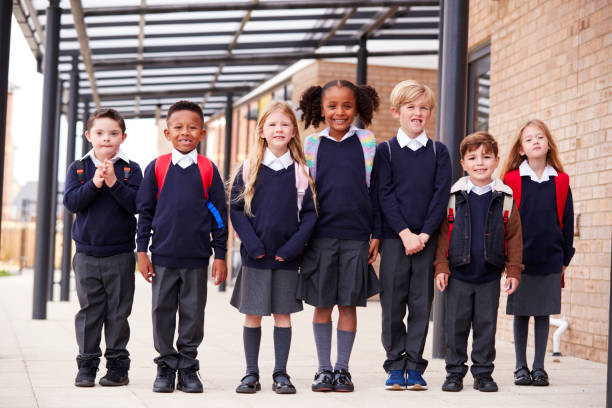
Many buyers prioritize price when choosing school uniforms. However, from a long-term operational perspective, product durability is often more important than one-time purchase cost.
Using durable school uniform fabrics creates higher value throughout the product lifecycle, resulting in more stable procurement revenue for schools, brands, and distributors.
Reduced Replacement Frequency
Durable school uniforms can withstand long-term wear and daily washing, eliminating the need for frequent replacements.
For parents, it also reduces the need for repeat purchases due to damaged uniforms.
Therefore, durable school uniform fabrics demonstrate higher economic value over long-term use.
Reduced After-Sales Costs
Product durability directly impacts after-sales service pressure.
If school uniforms are prone to wear, deformation, or other quality issues, brands may need to invest more resources in handling returns, exchanges, customer inquiries, and after-sales service.
Using reliable, durable school uniform fabrics helps brands reduce after-sales risks, improve customer satisfaction, and further enhance their market reputation.
For wholesalers, this also means more stable customer relationships.
Enhancing Brand Competitiveness
Today, more and more schools and purchasing agencies are focusing not only on price but also on product quality during the bidding process.
Brands that can consistently provide durable school uniform fabrics are more likely to secure long-term partnerships.
For OEM brands, high-quality products not only strengthen customer trust but also help build a professional image, creating more opportunities for future market expansion.
Improving Supply Chain Operational Efficiency
Stable product quality reduces uncertainties in the production and sales process.
For long-term projects, using mature and reliable durable school uniform fabrics helps to:
- Improve order delivery efficiency;
- Maintain consistency across different batches;
- Reduce the risk of rework due to quality issues;
- Improve overall supply chain management efficiency.
For global buyers, this is also an important foundation for establishing long-term partnerships.
Supporting Long-Term Brand Development
Brand building is a continuous process of accumulation, and product quality is the core support for brand development.
Continuously using durable school uniform fabrics not only improves end-user satisfaction but also helps the brand build a positive market reputation.
As customer trust in the brand increases, businesses are more likely to secure repeat orders and long-term partnerships, thus achieving sustained growth.
Frequently Asked Questions about Durable School Uniform Fabrics
What fabrics are most commonly used for durable school uniforms?
The most common choices are cotton, polyester, and blends of the two. Cotton is comfortable and breathable, making it suitable for long hours in the classroom. Polyester is highly durable, resisting shrinking, wrinkling, and abrasion. Cotton-polyester blends are often the most practical option, as they combine the comfort of cotton with the strength and easy-care properties of polyester, making them ideal for daily wear and frequent washing.
Which fabric is the most durable for school uniforms?
Fabrics with a high polyester content, such as a 65/35 polyester-cotton blend, typically offer the best durability. These materials strongly resist tearing, pilling, and color fading. While pure cotton is comfortable, it tends to wear out and lose its color more quickly than polyester-rich fabrics.
What fabric weight (GSM) is suitable for durable school uniforms?
For core uniform pieces like shirts, skirts, and trousers, a fabric weight between 180 and 240 GSM (grams per square meter) is standard. Fabrics lighter than 160 GSM may not be durable enough, while those heavier than 260 GSM can be too warm or stiff for everyday wear in many climates. Winter uniforms or blazers often use heavier fabrics for extra warmth and structure.
How does fabric choice affect the longevity of school uniforms?
Several factors determine a uniform’s lifespan. Polyester-rich blends resist abrasion and tearing better than pure cotton. Tightly woven fabrics like twill reduce snagging and protect the fibers. High-quality dyeing prevents color from fading after repeated washing and sun exposure. Additionally, special finishes that resist stains and wrinkles help the garment maintain a newer appearance for longer.
How important is comfort compared to durability?
Both are equally important. A durable uniform is not practical if it’s too uncomfortable for a child to wear all day. Key comfort factors include a soft feel, breathability for active play, and enough flexibility for easy movement. Cotton-polyester blends are popular because they offer a good balance, providing all-day comfort while being tough enough to withstand daily use.
How does climate influence the best fabric choice for durable uniforms?
In hot and humid climates, fabrics with a higher cotton content are preferred for their breathability and moisture absorption. In cooler climates, fabrics with more polyester and a heavier weight offer better warmth and wind resistance. Using a layered approach, such as a shirt with a sweater or blazer, allows for durable fabric choices that remain comfortable in various temperatures.
What fabric properties should schools and parents prioritize?
When selecting uniforms, focus on four key areas. Prioritize durability, looking for resistance to tearing, pilling, and shrinking. Ensure comfort and safety with breathable, non-irritating materials. Check for good colorfastness to prevent fading. Finally, consider ease of care—the fabric should be machine washable, quick-drying, and require minimal ironing.
How many washing cycles should durable school uniform fabrics withstand?
High-quality polyester and polyester-rich blends are typically designed to endure over 100 domestic wash cycles while maintaining their color and shape. Cotton-rich fabrics may show signs of wear, like gradual thinning or slight shrinkage, sooner than their polyester counterparts. Following the garment’s care instructions is essential to reaching its maximum lifespan.
Are wrinkle-free or stretch fabrics good for durability?
Yes, they can be. Wrinkle-resistant finishes and polyester fibers reduce the need for ironing, which protects the fabric from repeated high heat. Stretch fabrics, usually containing a small amount of elastane, improve comfort and reduce stress on seams. As long as the stretch content isn’t excessive, these features can enhance a uniform’s practicality without sacrificing durability.
How does fabric choice impact cost over time?
While higher-quality polyester blends might have a higher initial cost, they often save money in the long run. Durable fabrics that resist fading and tearing need to be replaced less frequently, lowering the total cost per school year. Easy-care fabrics also reduce time and energy costs associated with laundry and ironing.
What maintenance practices extend the life of school uniform fabrics?
To maximize a uniform’s life, always follow the care label instructions, especially regarding wash temperature. Use mild detergents and avoid harsh bleach. High heat from tumble dryers and irons can damage fibers, so use lower settings. Treat stains promptly and store clean uniforms in a cool, dry place.
What are common problems with school uniform fabrics, and how can they be avoided?
Common issues include fading, pilling, shrinkage, and tearing. Fading can be prevented by using quality, colorfast fabrics and gentle detergents. Pilling is less likely with tighter weaves and anti-pill finishes. Shrinkage is minimized by choosing blended fabrics and avoiding high-heat washing. Tearing at stress points like knees can be avoided by selecting fabrics with an appropriate weight and reinforced seams.
Are there eco-friendly options for durable school uniforms?
Yes, sustainable options are becoming more available. Recycled polyester offers similar durability to new polyester but uses fewer resources. Organic cotton can be blended with polyester to balance environmental benefits with the performance needed for school wear. These options allow schools and families to choose durable uniforms that are also more environmentally conscious.
How should schools write fabric specifications for durable uniforms?
A clear specification should detail the fiber composition (e.g., 65% polyester / 35% cotton), the fabric weight or GSM range, and the weave type (e.g., twill for trousers). It should also include performance requirements, such as minimum standards for colorfastness, pilling resistance, and limits on shrinkage after washing.
What should parents look for when buying durable school uniforms?
Check the label for a cotton-polyester blend, which offers a good balance of comfort and durability. Feel the fabric to ensure it isn’t too thin or scratchy. Examine the construction quality, looking for strong seams and secure buttons. Finally, confirm the care instructions are practical for your family, preferring machine-washable and quick-drying garments.
Final Thoughts
In the school uniform production process, fabric not only determines the wearing experience but also directly affects the uniform’s durability, overall quality, and long-term purchasing value. Therefore, school purchasing departments, school uniform brands, wholesalers, and distributors should all consider durable school uniform fabrics as an important standard for product development and supplier evaluation.
As a professional OEM/ODM apparel manufacturer, Hangzhou Garment also boasts a complete production process, providing flexible customization support based on client project requirements and offering reliable manufacturing services to brands and buyers of all sizes.




 English
  French
  Portuguese
  Hindi
Hindi  Italian
  Japanese
  Korean
  Spanish
  Arabic
  German
  Russian